Edible Jewels: Morels and Jewelweed
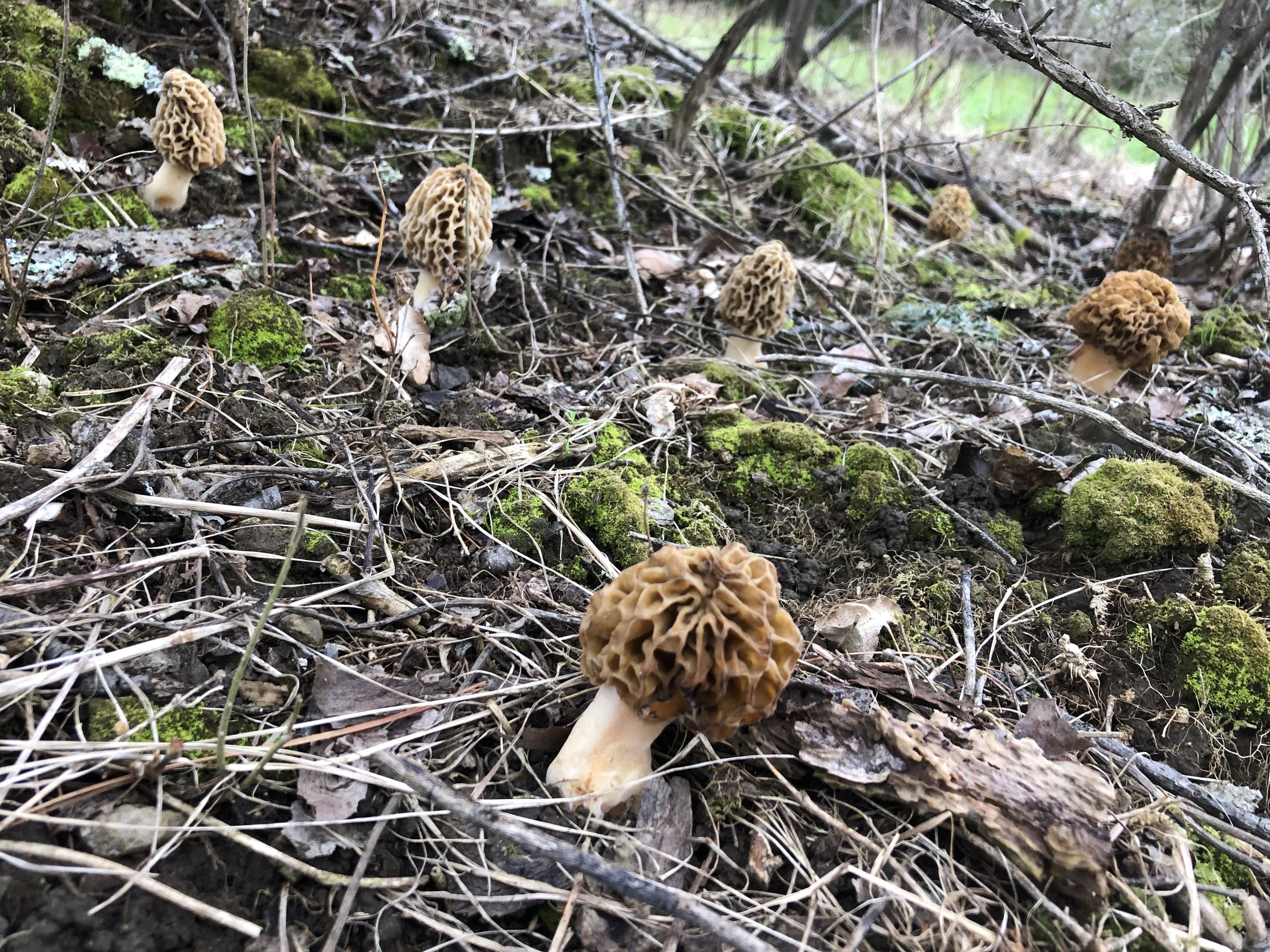
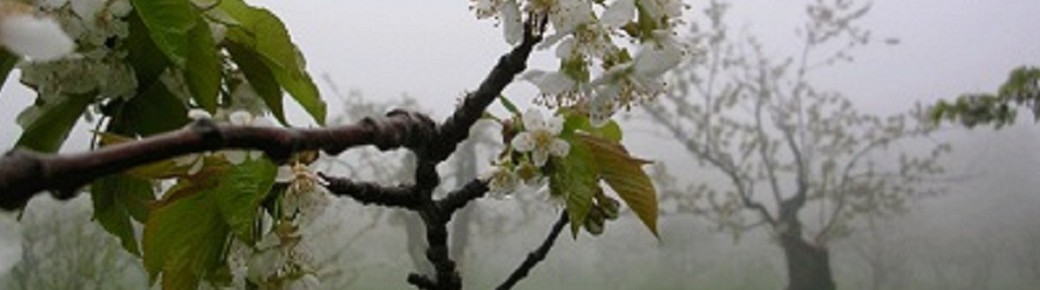
I was walking through a field punctuated with old apple trees with a friend several springs ago, when I spied little cream-colored phalluses standing amongst the blades of grass. My eyes widened, “You’re kidding! Really? Just like that?” We got closer and I was still amazed. “Have you tasty gems been here all these years and are just popping up now?” I was of course talking with Common Morel aka Yellow Morel Morchella Americana. As the Latin name suggests, yes, morels are indigenous to North America. Morels are a reason I think the activity of foraging for mushrooms is called mushroom hunting. Cause these little beings don’t seem to stay in the same place year after year. You have to hunt for them. And they only appear for a few weeks in the spring mid-April to mid-May. So March is a good time to start considering where to concentrate your efforts for Morel hunting. Old Apple orchards are a great place to look. So are old burn spots. Other trees morels are associated with include Ash, Elm, Sycamore, Poplar, and Hickory.
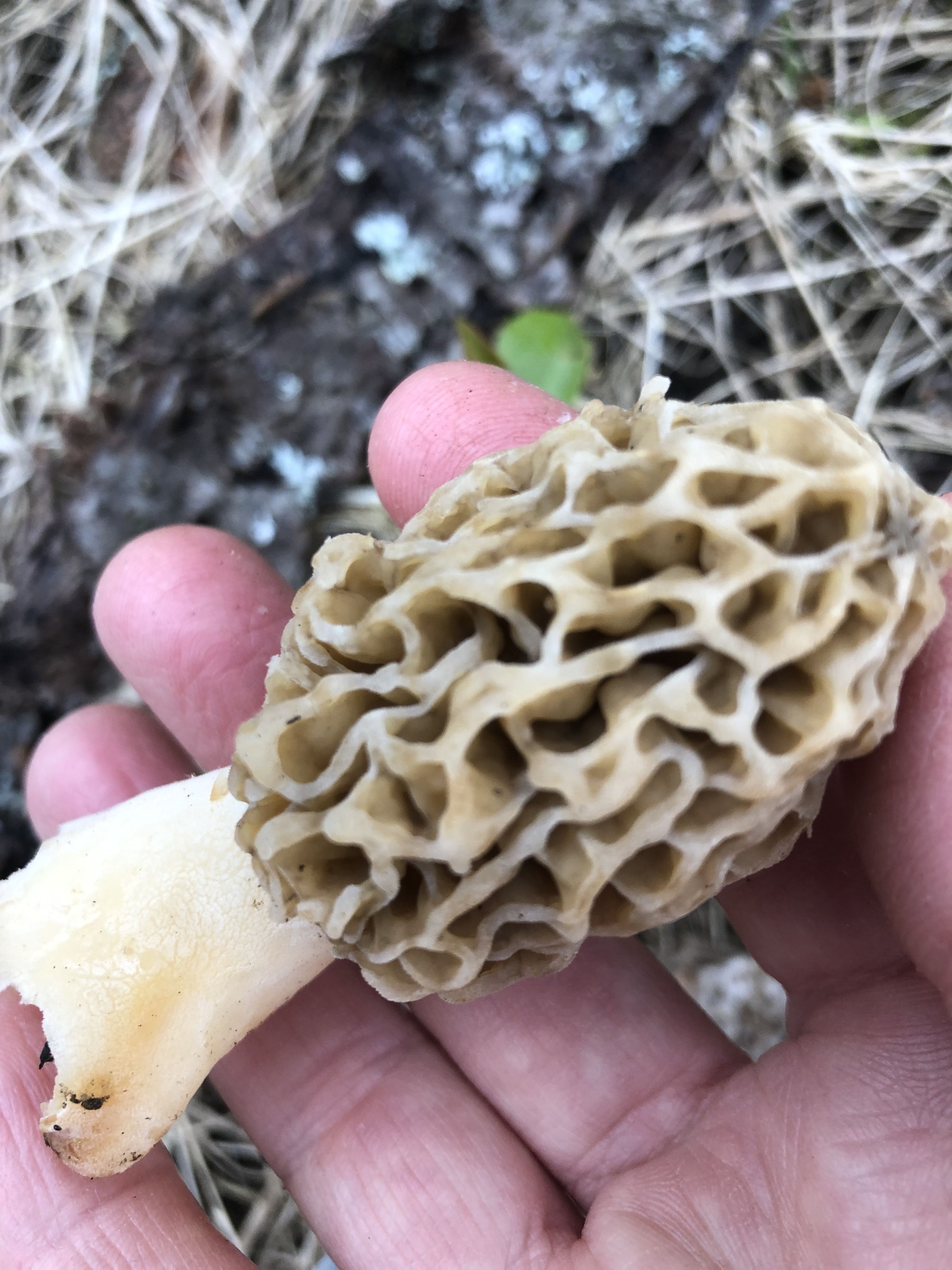
Morels’ caps appear brainy, wrinkly, and honeycomb like. Their color can be cream, yellow, or brown. Their stipes (stems) are stout and cream colored. The cap attaches directly to the stipe. They tend to grow up from the duff singularly and usually when you find one, you will find many more decorating the ground. To be sure they are a true Morel, and therefore edible, you must cut them in half lengthwise to be sure they are hollow throughout. from cap to the bottom of the stipe.
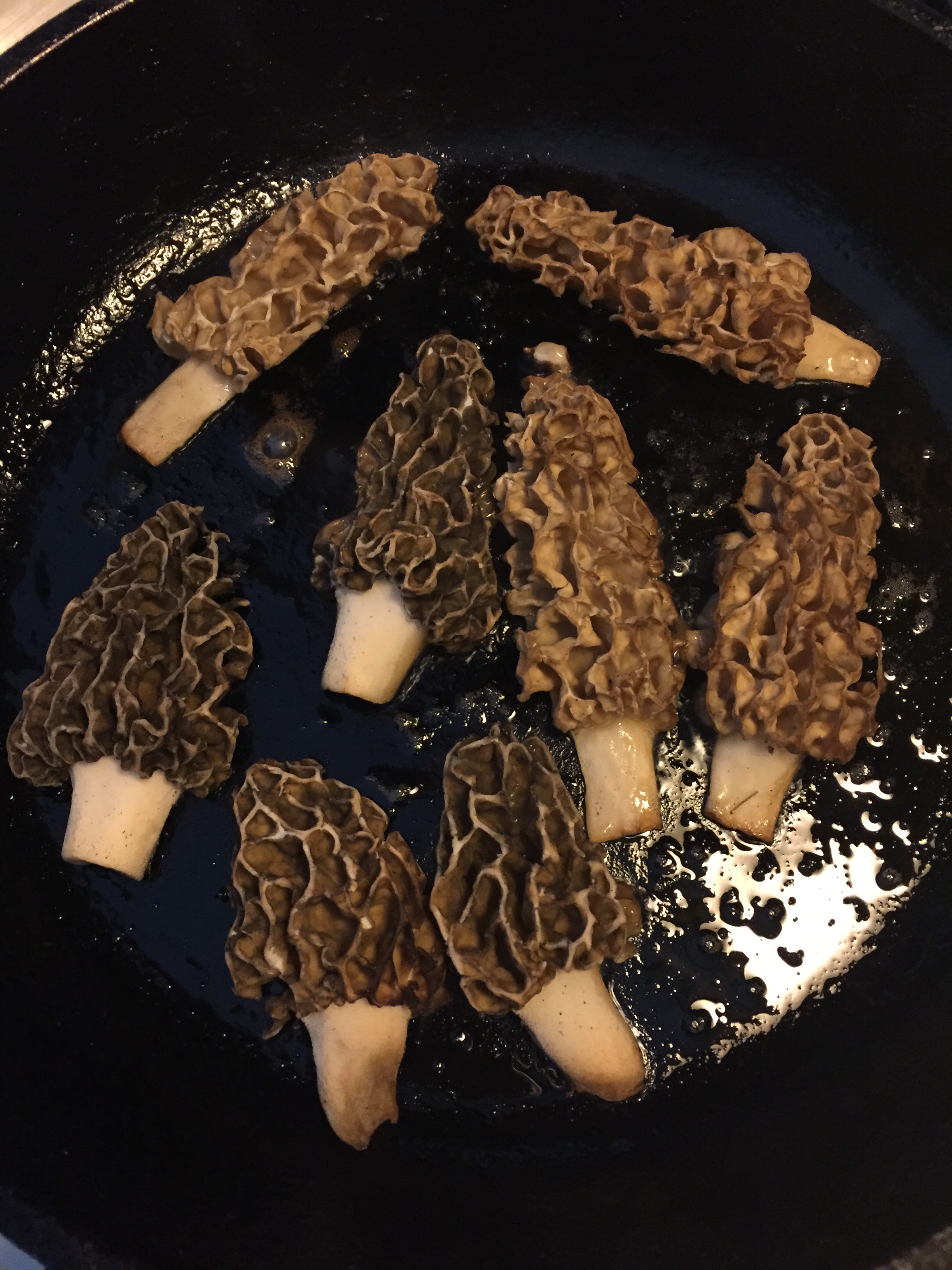
As mushrooms are the fruiting bodies of fungi, you will not kill the fungi by harvesting the mushroom. Whether you cut or gently pull up the mushroom, you are not damaging the fungus. But please remember not to pick them all. Leave some to spread their spores. Some for wildlife. Some for other foragers. Inspect the ones you’ve gathered for creepy-crawlies. If the cap is riddled with them, I would recommend passing on that individual and let the bugs have their way and that way more spores are left in Nature to spread more morels. After you have collected them and have returned home, rinse the mushrooms and then cut all in half lengthwise to be sure all are hollow – which also makes for easier sautéing. Sauté and eat. Their flavor profile is earthy, nutty, meaty. Yum!
Though I no longer have access to that field, I keep hoping the ones I brought with me and sprinkled around the apple trees in my yard will take. Perhaps this spring, sometime in April after the snows have melted and it’s above 50 degrees in the evening and a few days after a good soaking rain, in the distance I will see my little wild neighbors decorating the base of the old Apple tree like a jeweled necklace.
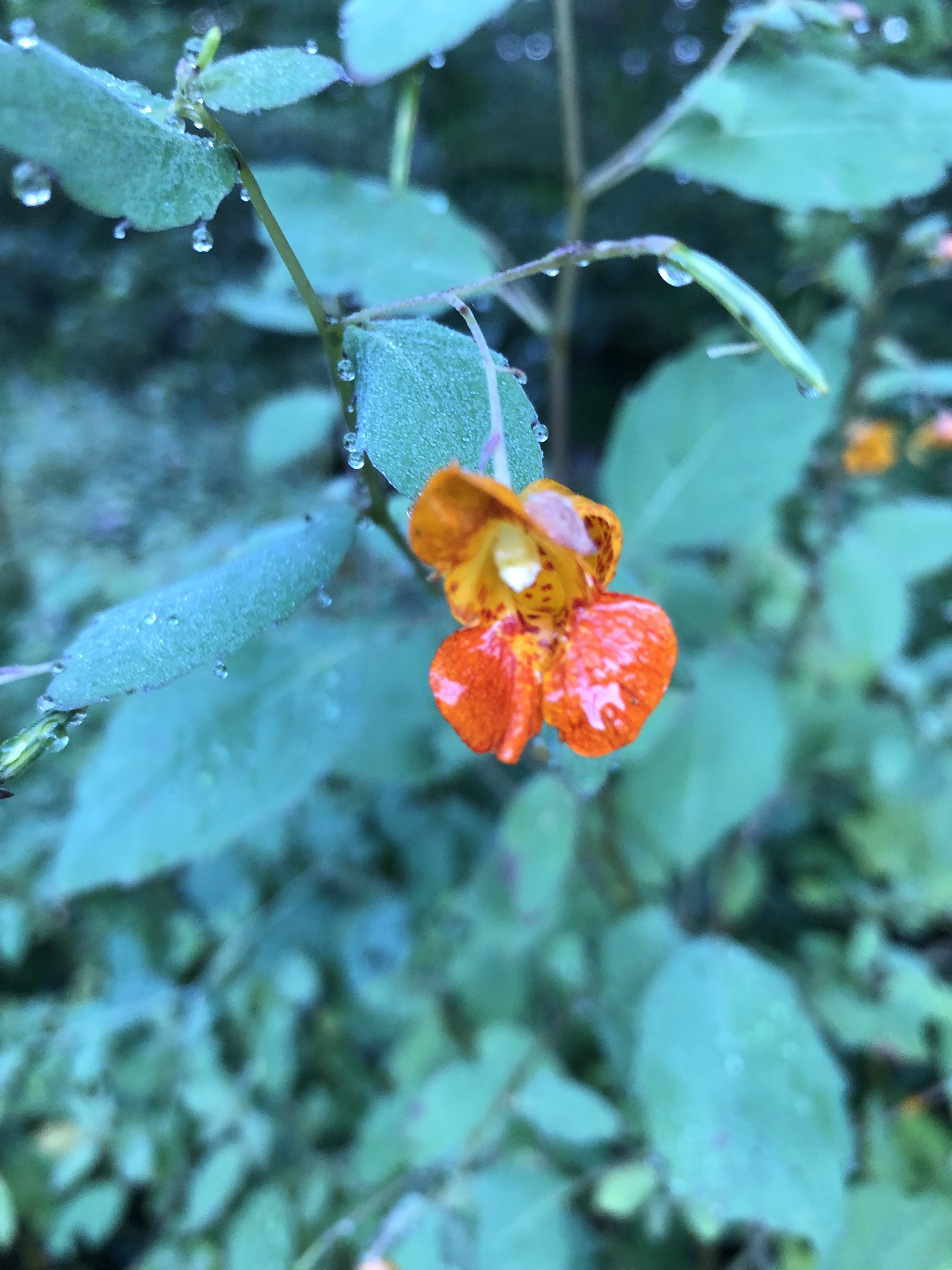
Speaking of jewels…
As spring progresses, in later April and early May, Jewelweed will emerge from the wet ground that they love. Jewelweed, aka Orange Jewelweed, Spotted Jewelweed, Spotted Touch-Me-Not, and Impatiens capensis, is an abundant native annual who grows in shade to partial shade. When they are babies, they can appear almost carpet-like in moist woods. As they grow, you may start noticing their shimmery green, widely-soft-toothed, alternate, elliptic leaves where raindrops and dewdrops bead. This is one reason they are called Jewelweed. They other is that inside their “touch-me-not” seed casings, are tiny robin-egg blue seeds that look very jewel-like. Depending on the variety, flowers can be orange or yellow with reddish-brown spots. The fused petals form a hood at the top and a spur in the back. They do not have a fragrance.
I have not eaten Jewelweed’s young leaves but they are edible cooked. Though many of our typical grocery dark greens contain oxalic acid, Jewelweed is particularly high in this compound, and though not a toxin, in high amounts it can affect your body’s ability to absorb vitamins and minerals. So just don’t eat a plateful of them. The taste is apparently bland so it just hasn’t been much of a draw for me as there are so many other spring wild edibles that do taste delightful that I just haven’t gotten around to cooking and sampling them – but I will. And then I will add them to my wild edibles classes just so folks can assess the taste for themselves. I have popped the seeds in my mouth and haven’t noticed much of a taste but roasted they taste nutty. Given they are very tiny, it takes effort to capture the seeds as they sproing from their little spring-loaded catapult-like seed pod.
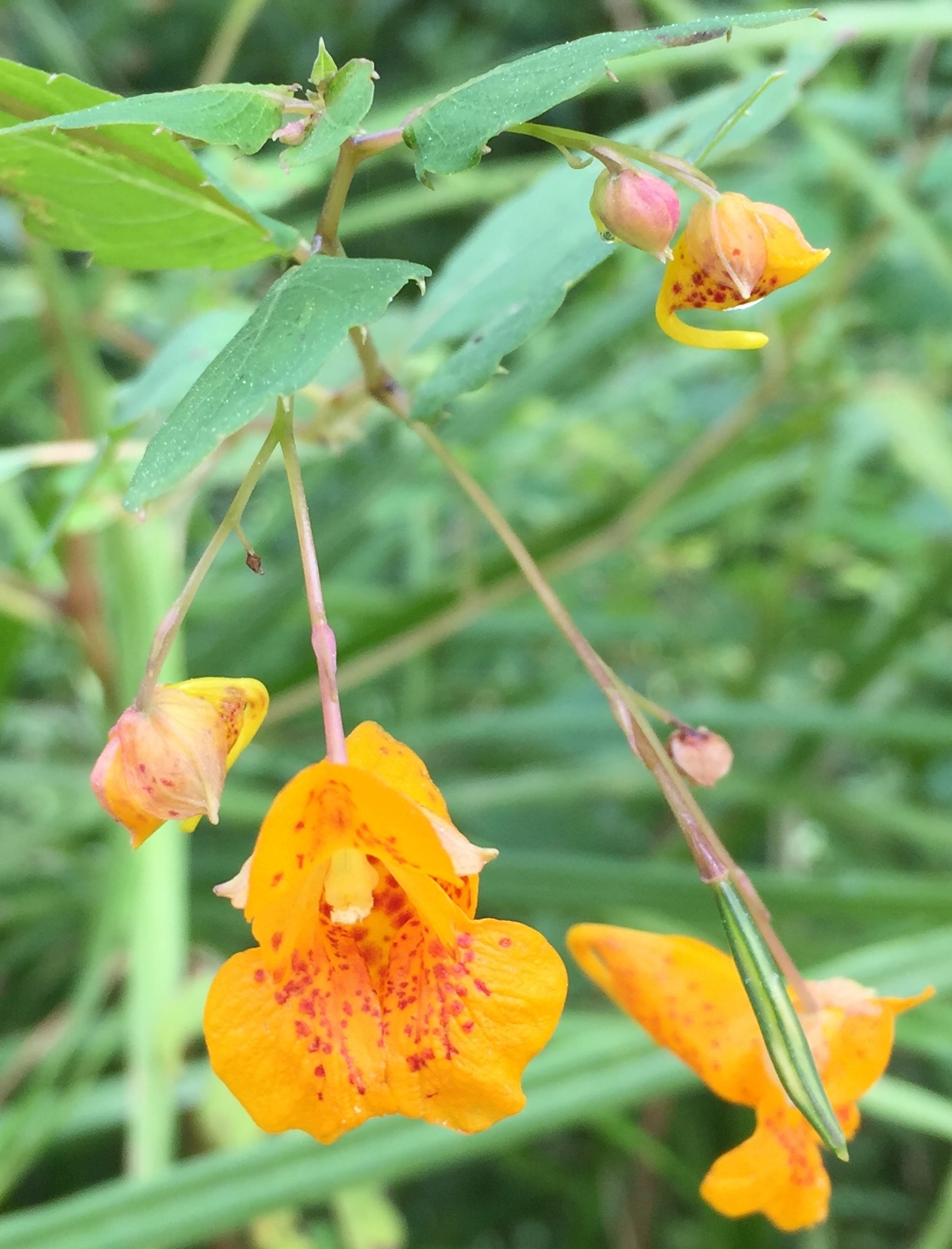
This plant is a medicinal treatment for Poison Ivy. Crush fresh leaves and stems and place as a poultice on your skin where you were exposed to Poison Ivy’s sap which contains urushiol, the compound responsible for giving us that red weeping itchy rash. It is best to use Jewelweed fresh in spring and summer. Jewelweed contains anti-itching properties which helps you avoid spreading the oil to other parts of your skin. Though not as potent, you can make a vinegar-based tincture for later use, given that you can run into Poison Ivy in any season if you crush the stem and get the sap on you. A Jewelweed wash is better than nothing when you don’t have fresh leaves available.
And bonus, if you allow Jewelweed to grow, they will attract Ruby-throated Hummingbirds and you can then experience cuteness overload with these vibrant beings zipping around your yard enjoying the sweetness life has to offer.
Happy Spring and happy foraging.
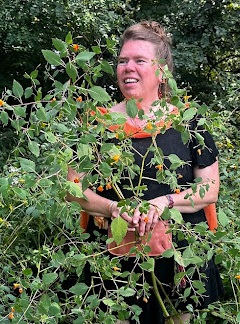
Arianna Alexsandra Collins, naturalist educator, poet, writer, wild edible enthusiast, and Wiccan High Priestess.

An edited version of this article appeared in the March 2026 edition of The Ashfield News.
Like Offerings for Community Building on Facebook to learn more about wild edible and medicinal flora and fungi and recipes to incorporate wild foods into your meals.
Visit Offerings for Community Building for rates and packages on having a wild edible and medicinal flora and fungi inventory conducted on your Land (in New England).
Like Hearken to Avalon on Facebook and learn more about the magical world and natural history of plants and the Faie,
P.S. Ha! Somehow I forgot that I wrote about Morels in May 2024. You can read that article HERE. In that article I go over False Morels. I also describe Ostrich Fern and how to cook their fiddleheads.
 Hearken to Avalon