Preserving Wild Foods: A Sweet Example
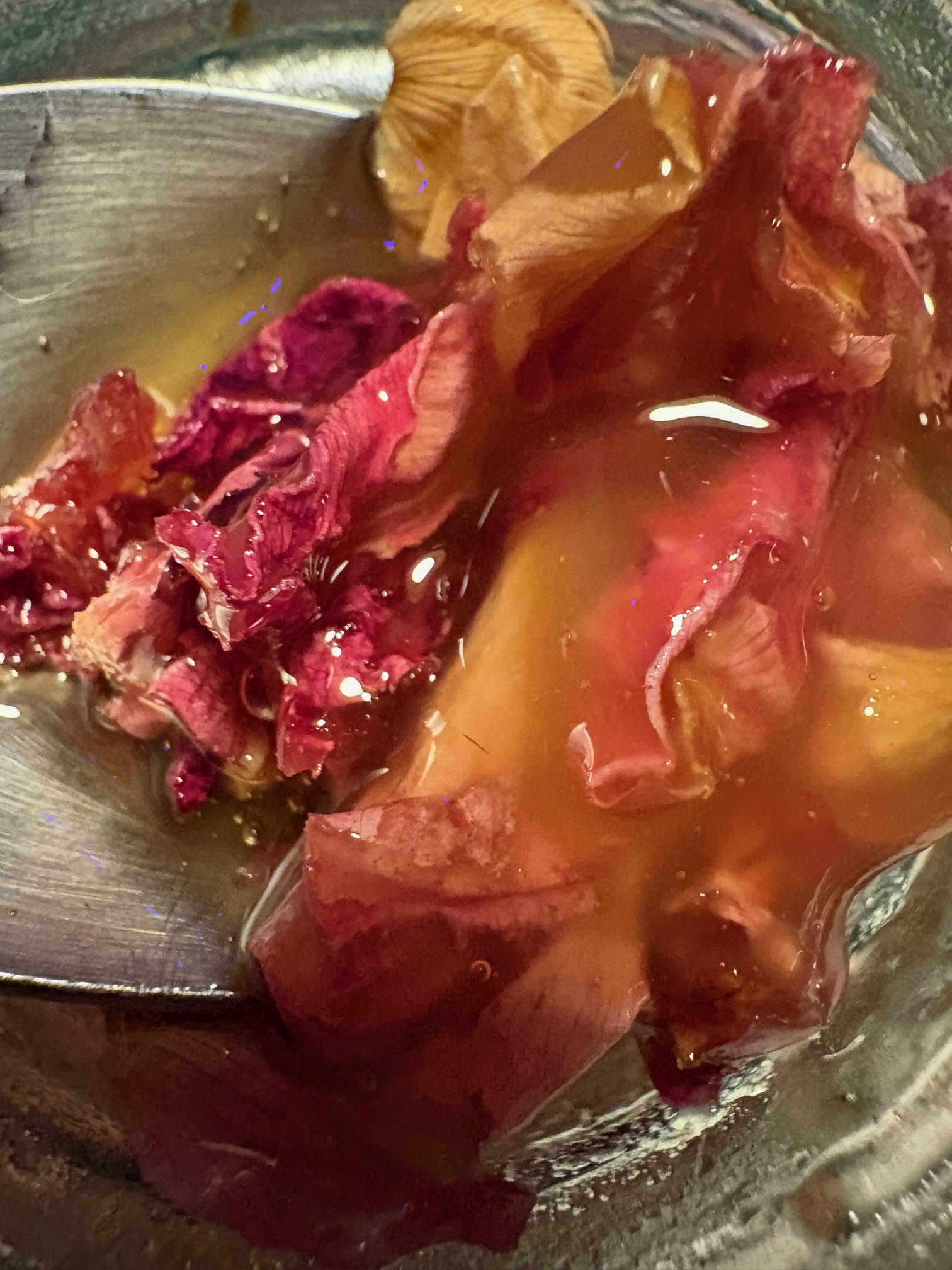
I asked Sarah (Ashfield’s Library Director) what could I possibly write about for the “Cellar’s Pantry,” Ashfield Spice and Herb Club’s “spice” of the month, and she said what about your Rose Honey? Mmmmm! Right, so this didn’t literally have to be about what food is sitting in my cellar. So it’s Sarah’s fault as I had to immediately go home, toast a slice of gluten-free rosemary baguette, slather Rugosa Rose Honey on it, and savor the deliciousness of summer.
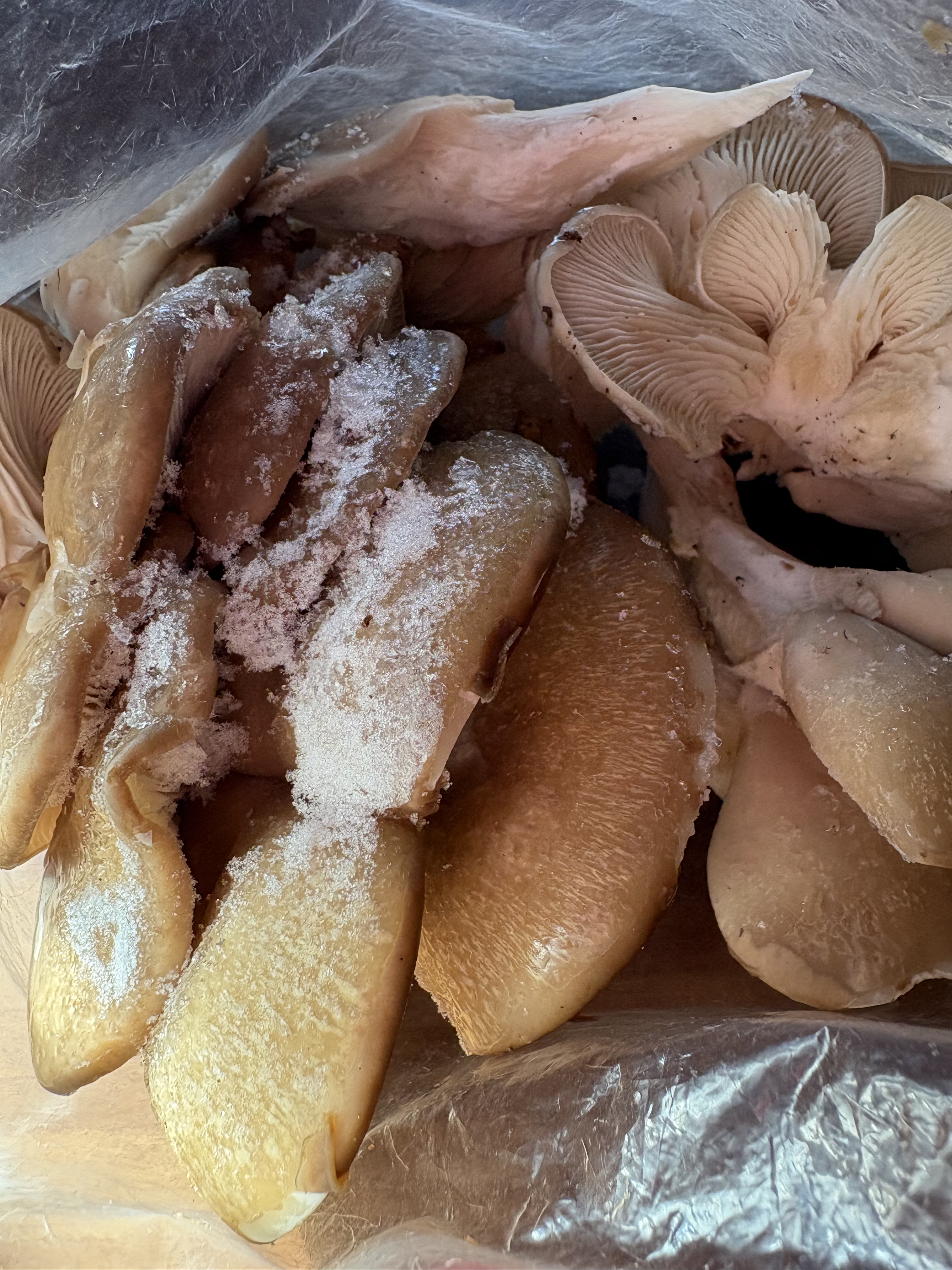
The thing about food preservation is you have to think about what you want to harvest and preserve it in the season the beings are growing in to get the reward of them in the depths of winter. You can’t think, oh I really want some dried roses for tea and realize you don’t have any because you didn’t harvest rose petals when the roses were blooming. Once in a while you might luck out as I did about a month ago when I really wanted mushrooms for a dish and I happened to be walking down the road and wouldn’t you know it, there was a flush of Winter Oysters (frozen to a trunk). What I didn’t use then I put in a bag in the freezer and was able to use it for another dish the next week.
And so as I slather honey-soaked rose petals on my toast and feel the deliciousness on my tongue I am thankful for thinking ahead and preserving this treat.
Much of what I preserve as a forger are wild herbs and flower petals that I then dry and loosely stuff into glass jars. And label. Always remember to label. It’s not fair to your nose if you forget to label and then you are sniffing mystery jars especially when they are not clear glass. (Note to self: Always remember to label the crushed hot pepper.)
There are some mushrooms that you can harvest and then simply throw in the freezer such as Chicken-of-the-Woods and Oyster. If you are going to dry store mushrooms, slice and dry them on racks by the woodstove or in a food dehydrator. Such ‘shrooms who work well being dried and canned are Chicken, Hen, and Reishi.
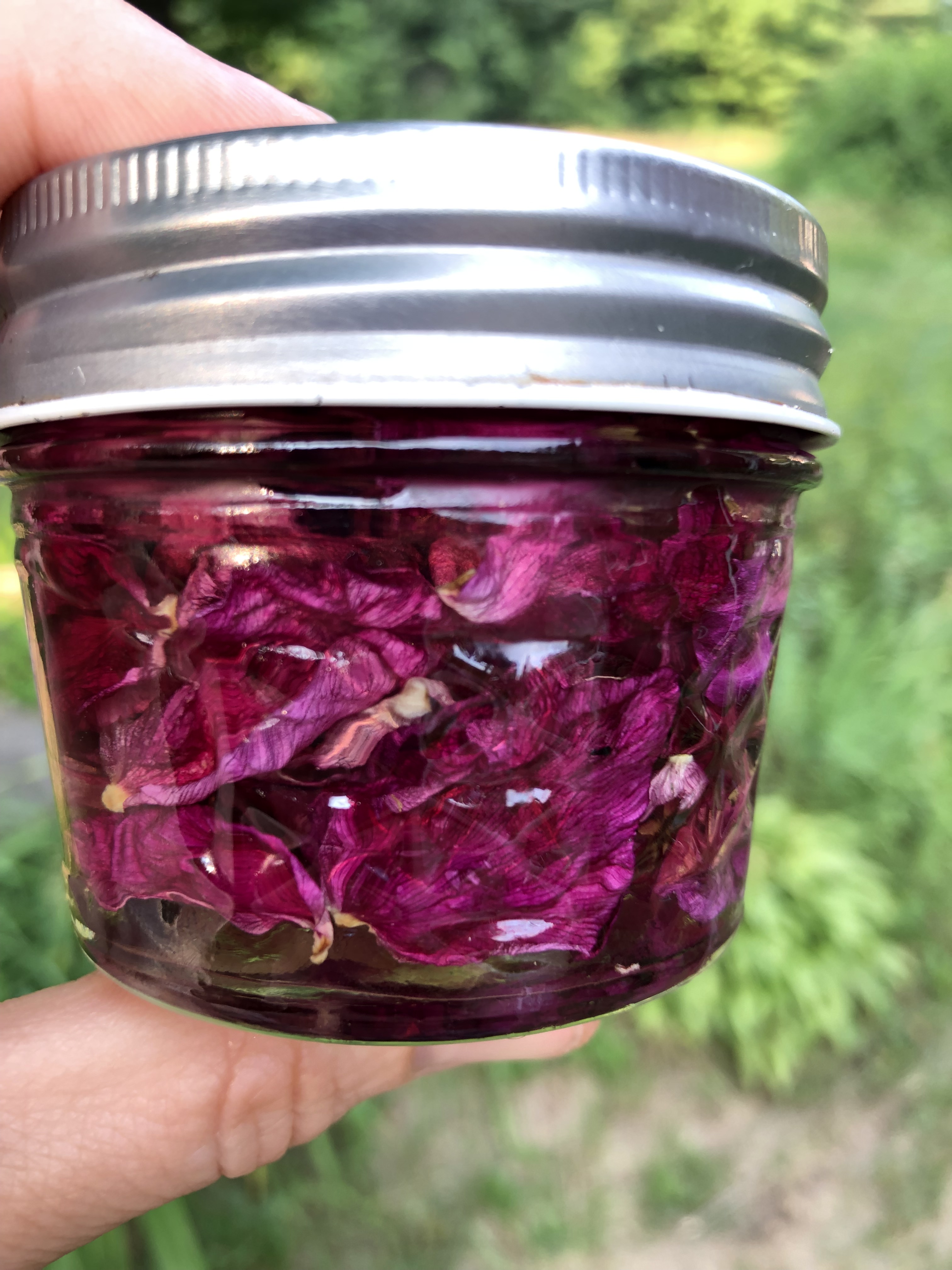
When considering which herbs and flower petals to preserve, consider what ailments you tend to deal with in winter and focus on those first. Also focus on herbs you have an abundance of and can give as gifts. Also, drying is just one option. You can also preserve your herbs in vinegar, honey, alcohol, or oil depending on what you plan to use them for.
Going back to the honey in your pantry. Honey keeps forever – literally. Archaeologists have found 3,000-year-old honey in Egyptian tombs – and it was still edible. Honey is rich in antioxidants and is antimicrobial. Honey possesses unique flavor profiles depending on which flowers the bees gather the pollen from. And then you can also add herbs and/or edibles flower petals for more flavoring and health benefits. Herbs/petals do not need to be removed after being covered in honey to extract their flavor but can be added directly to tea or dishes when using the herb-soaked honey.
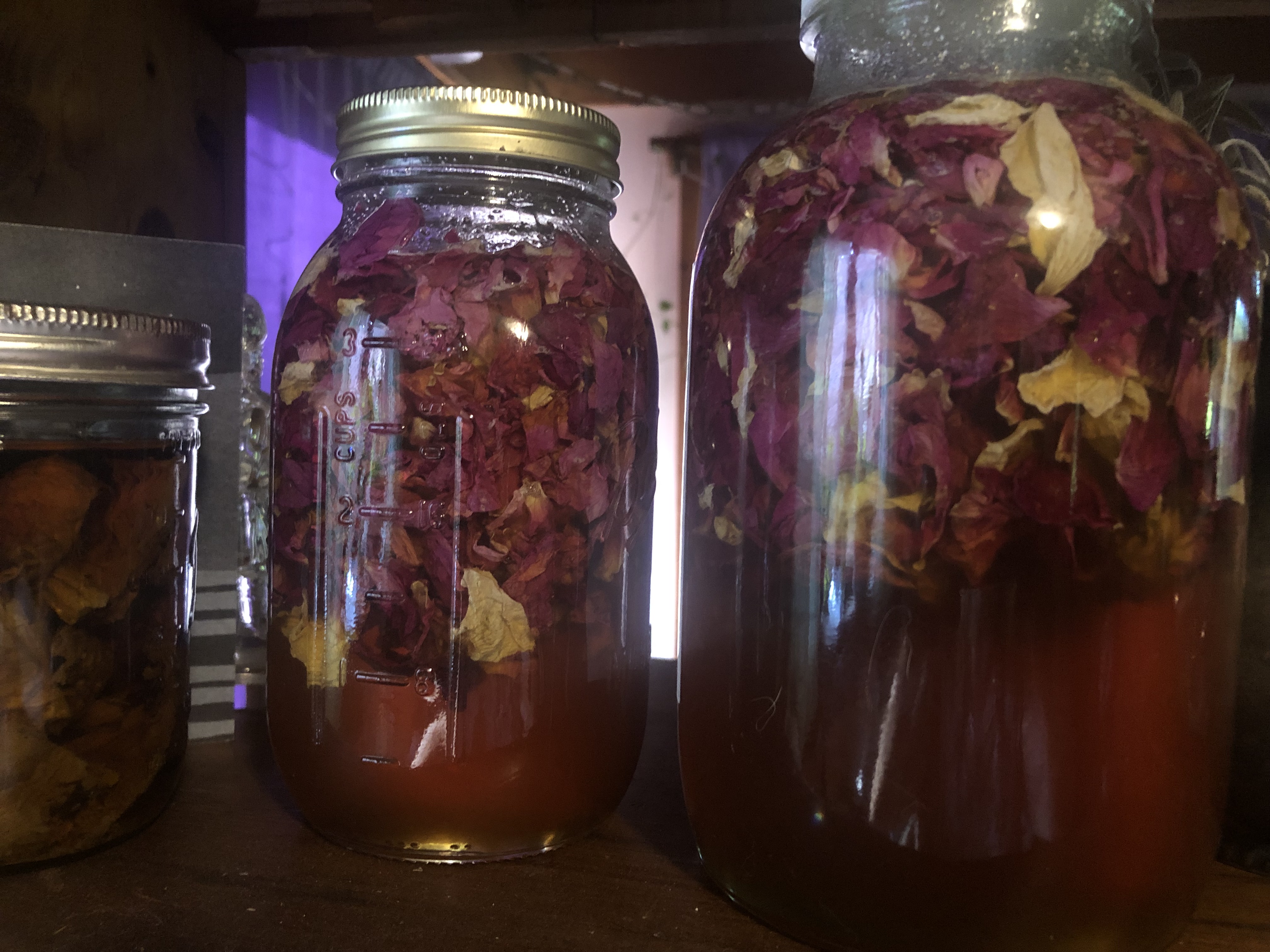
To make an herbal infused honey, loosely pack a jar with desired herbs and/or edible petals and pour in honey to cover herbs/petals. Be sure the herbs/petals have been dried enough and are not moist. Gently stir the mixture to coat herbs/petals and then top off with more honey. Screw the lid on the container. Check daily to be sure herbs/petals are entirely honey-coated so they don’t grow bacteria or mold. Petals may rise so take a spoon and push them down. Herb and/or flower-infused honeys can be used in as little as a week. And for my Rugosa Rose honey I keep the petals in the honey until they are used up.
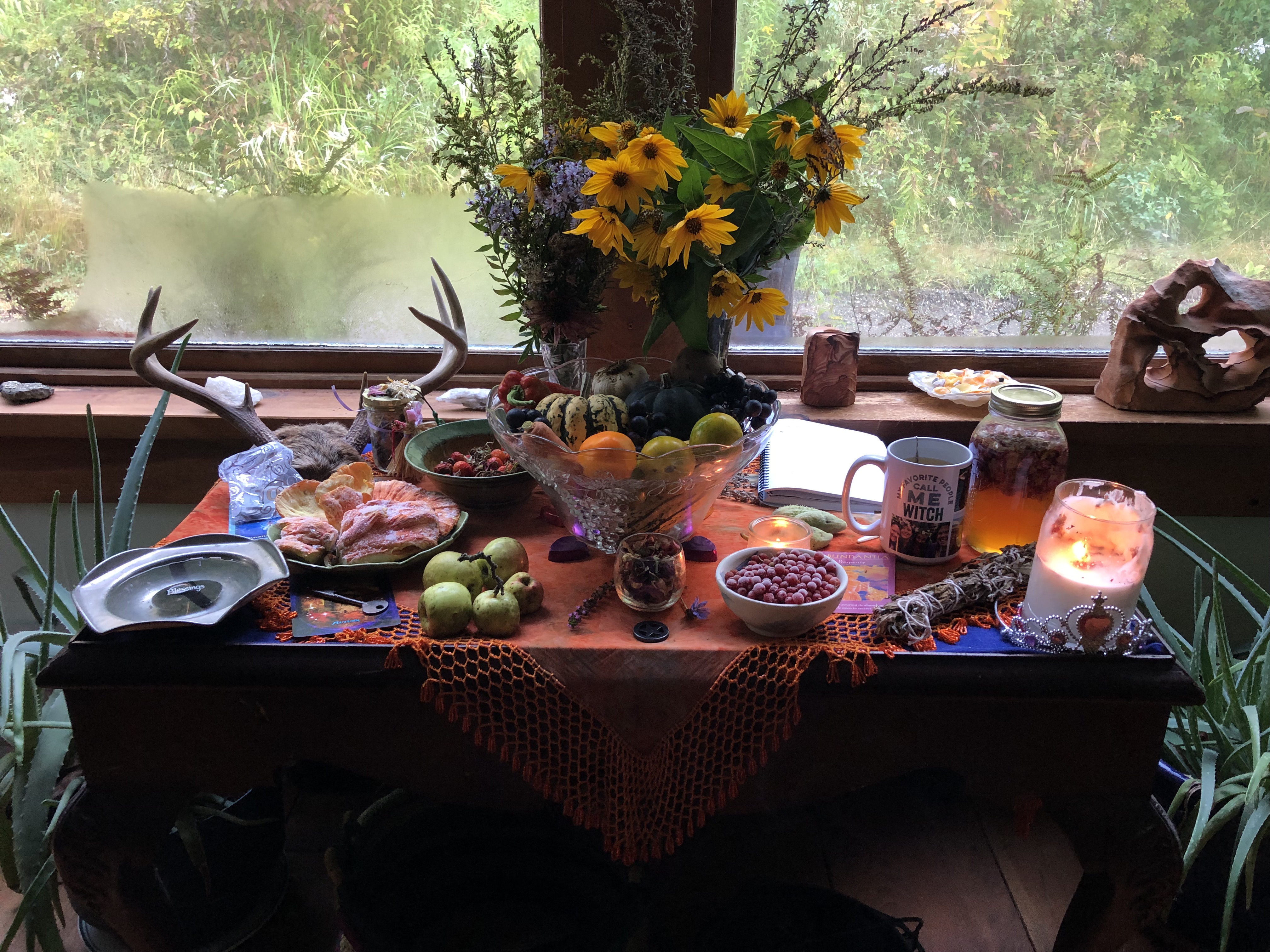
Magically honey is used to express richness and wealth. It is also used to honor work effort – think of all the work bees do to make honey. Additionally, when you want to add sweetness to your spellwork, place a small jar of honey on your altar. When you are calling more sweetness into your life, eat a spoonful of honey, savoring the vision of what you want to manifest.
Arianna Alexsandra Collins, naturalist educator, poet, writer, wild edible enthusiast, and Wiccan High Priestess.
This article is part of Ashfield Spice and Herb Club’s January 2026 zine, “The Cellar Pantry.” Ashfield Spice and Herb Club is a project of the Belding Memorial Library.
Like Offerings for Community Building on Facebook to learn more about wild edible and medicinal flora and fungi and recipes to incorporate wild foods into your meals.
Visit Offerings for Community Building for rates and packages on having a wild edible and medicinal flora and fungi inventory conducted on your Land (in New England).
Like Hearken to Avalon on Facebook and learn more about the magical world and natural history of plants and the Faie,
 Hearken to Avalon