Sunny Disposition: Coltsfoot and Forsythia
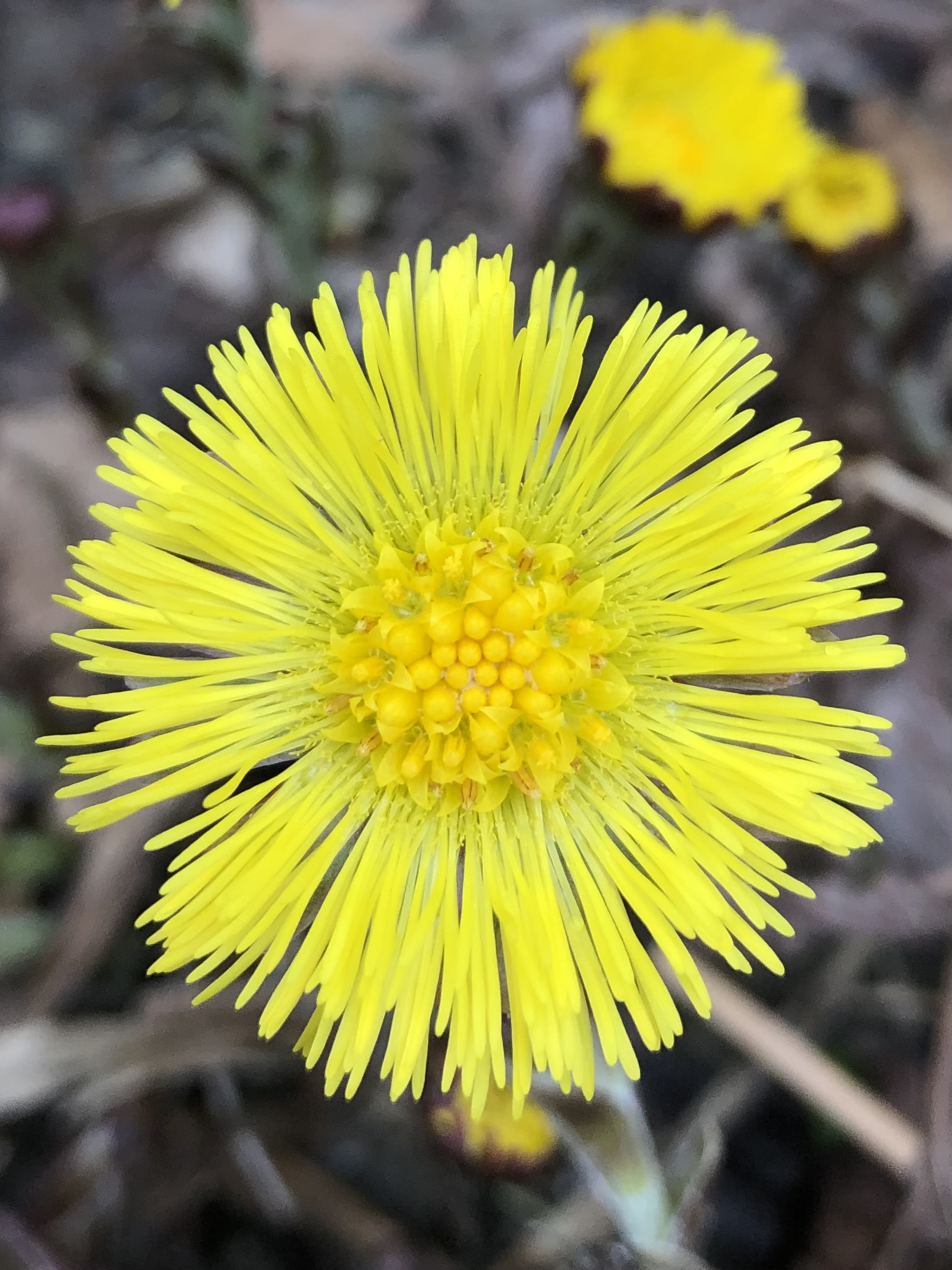
Also known as “Son before the father”, Coltsfoot is an early spring flower, the yellow flowerhead blooms before the leaves unfurl, hence – the “son/sun” shines first, before the arms of the “father/leaves” open. The basal leaves do remind one of a horse’s hoof. The flowerhead looks very similar to Dandelion, both in the family Asteraceae, which is defined by a composite flowerhead – though its inflorescence makes it look like one flower with many petals, it is actually many smaller flowers appearing as one. And this is why, though many of us do not speak Latin, it’s still good to know how flora, fungi, and fauna are connected by their Latin-named families. Sometimes knowing the Latin name can even explain why in the world a plant was named such. For example, Coltsfoot’s Latin name Tussilago farfara means “cough suppressing activity” which is a very specific trait Coltsfoot is good for medicinally.
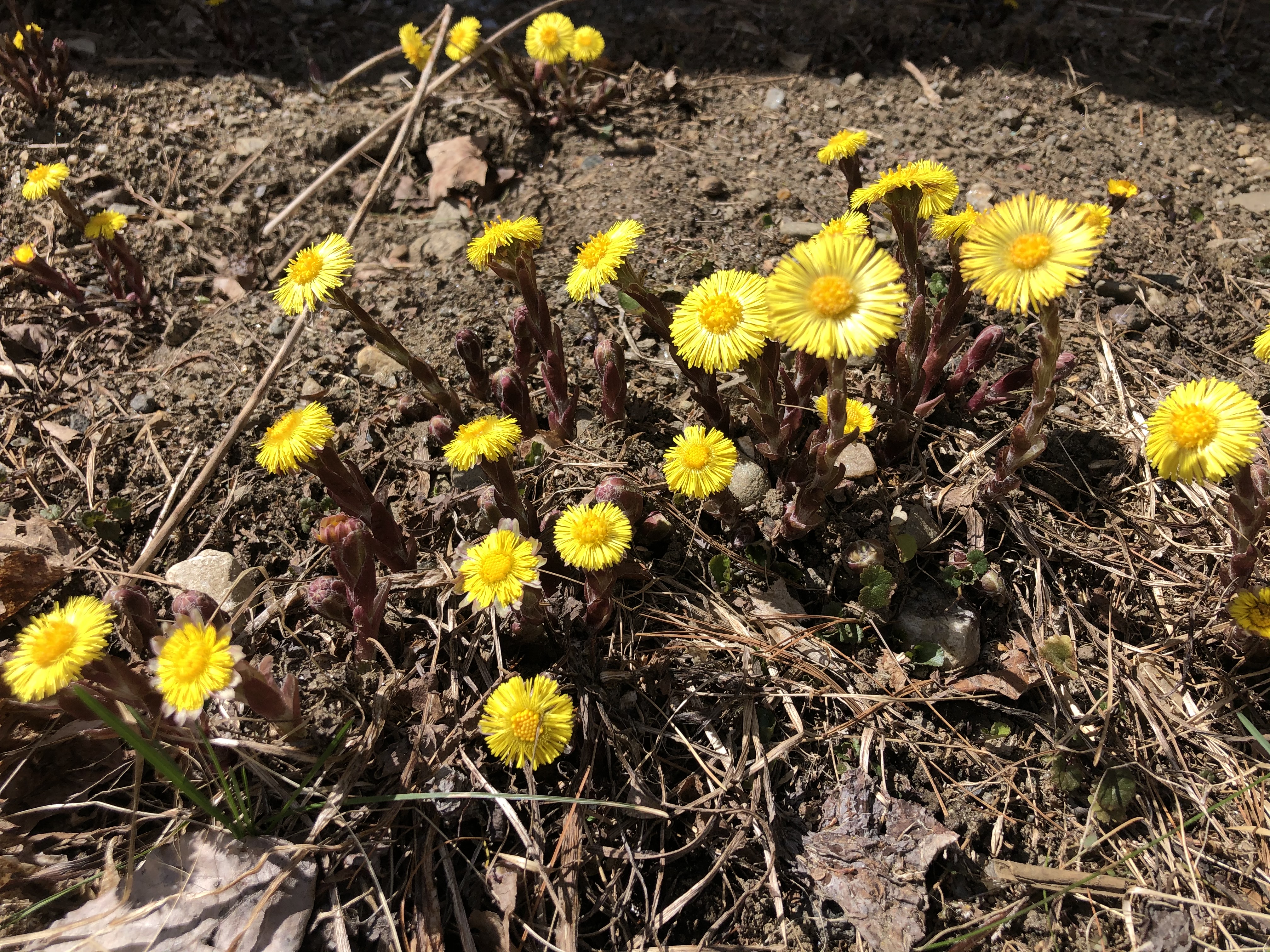
Heralding from Europe, Coltsfoot has become naturalized in the northeast. And though Coltsfoot can be a generalist when it comes to where ki grows, I have noticed this herbaceous plant appreciates cool wet feet and thrives where the snowmelt streams and puddles such as along shaded ditches and at the northeast corner of my house. In kins native homeland, Coltsfoot is known to be pollinated by bees, hoverflies, flies, and beetles. It would make sense that New England’s early-emerging insects would also take advantage of this food source, thus pollinating and helping to spread this plant.
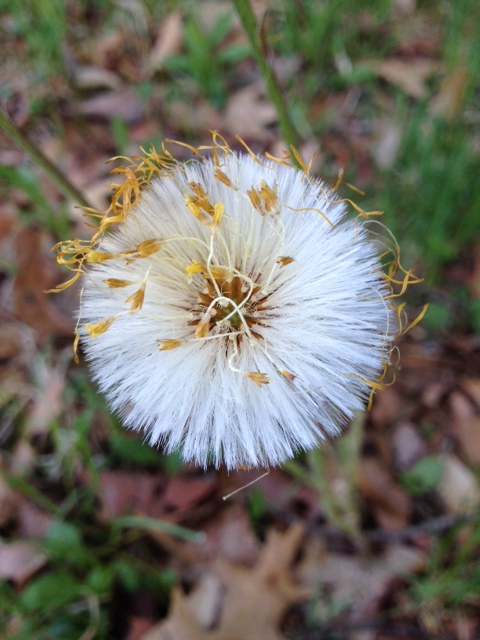
When the flowers’ buds are first emerging after the snows have melted in late March or April, they are purple-burgundy nobs that open bright sunshiny yellow flowerheads. As the stems gain height you will notice they are green and purple-burgundy and have tiny hairs and upward-pointing leafy scales. Coltsfoot seedheads look like densely packed powderpuff disks with delicate mustard-colored seeds peeking out like so many miniscule snakes emerging from their hibernaculum. Don’t seek to make wishes by blowing on the fluff in hopes the seeds will aloft similar to Dandelion’s parachute seeds. Though seeds are dispersed by wind and water, they do not individually get carried away by your breath.
Though there are other flora I would go to first (Slippery Elm and Black Cherry come to mind), due to kins mucilaginous properties, a tea made from Coltsfoot can sooth all types of coughs. Caution is warranted as Coltsfoot has been documented to cause liver issues with long-term use. Use for acute issues only.
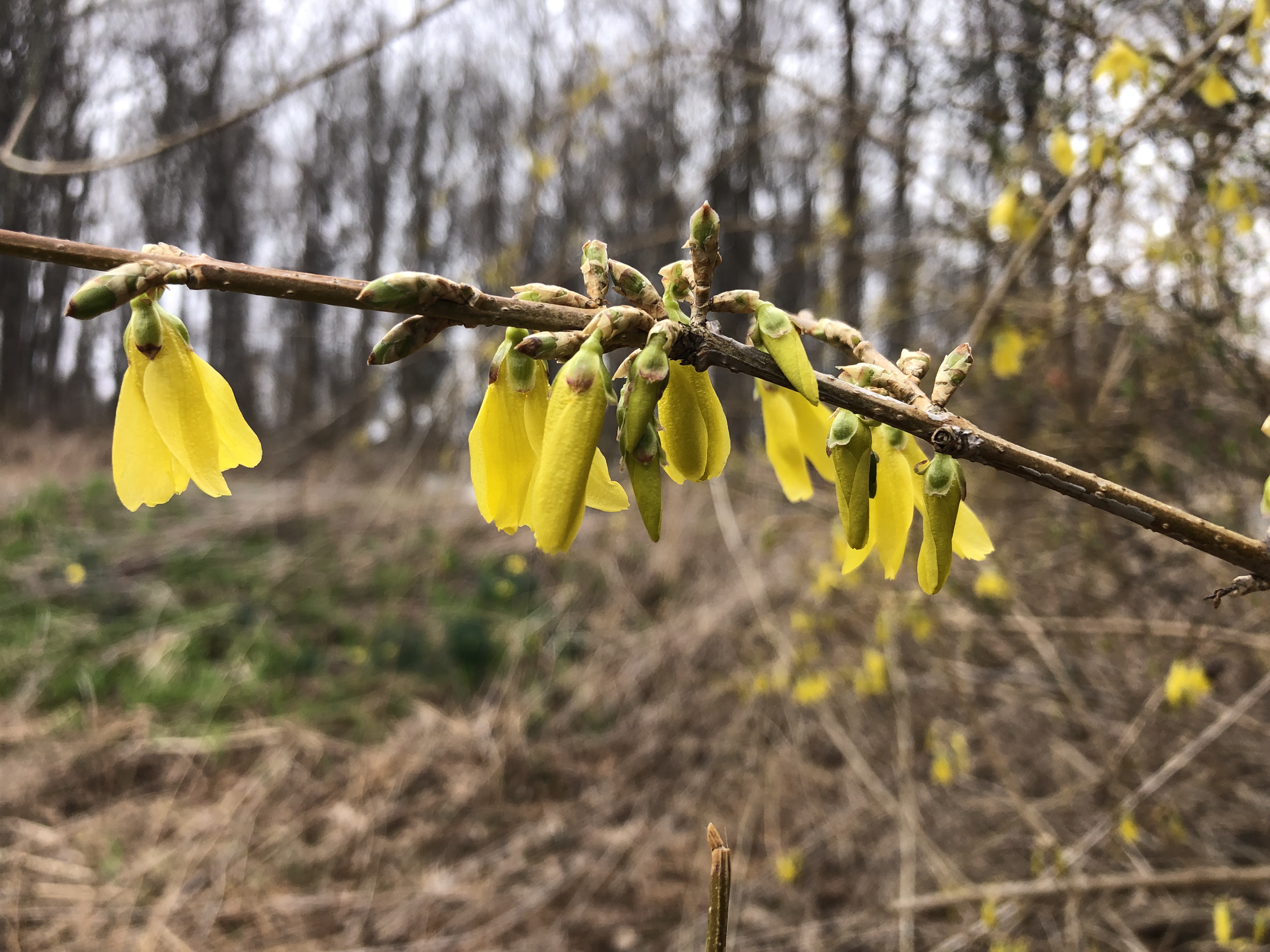
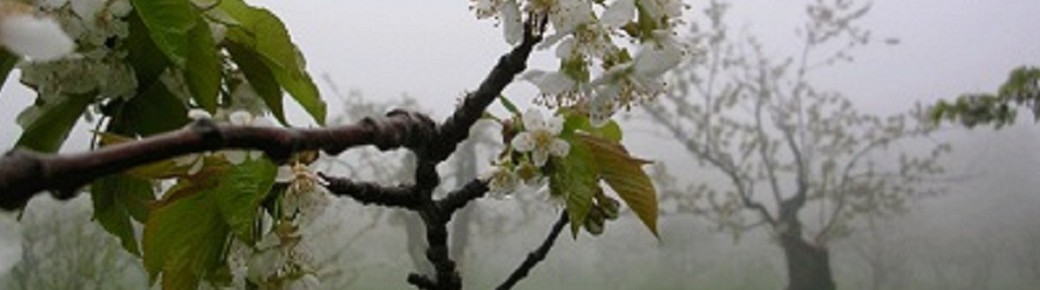
A bush that could also be named “son before the father” for the same reason (but isn’t) is Forsythia. This deciduous shrub heralding from Asia and southeastern Europe, also sports bright yellow flowers which blossom before the leaves unfurl. The small dark green serrated narrow ovate opposite leaves do not appear until after the four-petaled flowers begin to wither. The petals appear pinwheel-like, forming a short tube at the center. You may notice the arching golden-brown branches in the winter, but early spring is really when Forsythia gets noticed. Naturalized in New England, Forsythia flowers are a welcome treat to color up spring salads. And all this time you just thought they were pretty. Flowers contain vitamin C and antioxidants.
Lian qiao (Weeping Forsythia) fruit as a tea or tincture is a traditional Chinese medicine used to dispel heat in such troubles as that burning sensation from a urinary tract infection, fever, and swelling. Topically it can be used for acne, rashes, and to clear skin. This is news to me and I plan to try it this summer with the variety I have and will report back. The fruit is green when unripe and yellow when ripe. You can use both for the same ailments. Harvest unripe fruit during the summer to use fresh and ripe in the fall to dry for later use. Forsythia is for acute issues only. Do not use if you are pregnant or before surgery as studies indicate Forsythia may slow blood clotting.
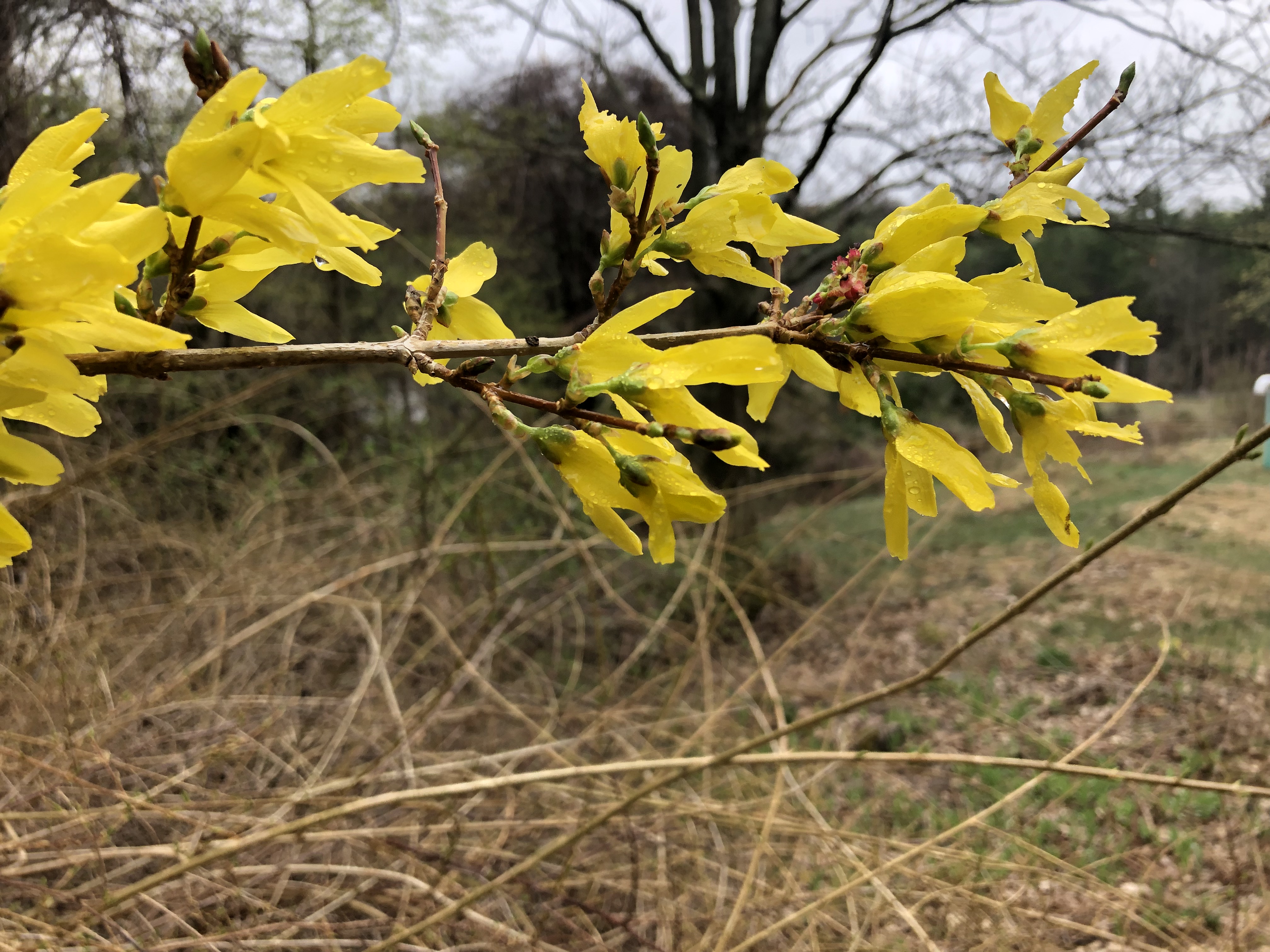
There are several species and cultivars of Forsythia, hence why you may see this shrub listed as Forsythia spp – the “spp” means several species. This time the Latin name does not denote flora use but honors a random white dude who did not “discover” or have any initial connection to the shrub, specifically Scottish botanist William Forsyth, founding member of the Royal Horticultural Society. (You can read more at eattheweeds.com.) Forsythia is a member of Oleaceae. Sometimes this family is called the Olive family, because sure, Olives are also a member of this family, but then so are Lilacs, another pretty edible flower.
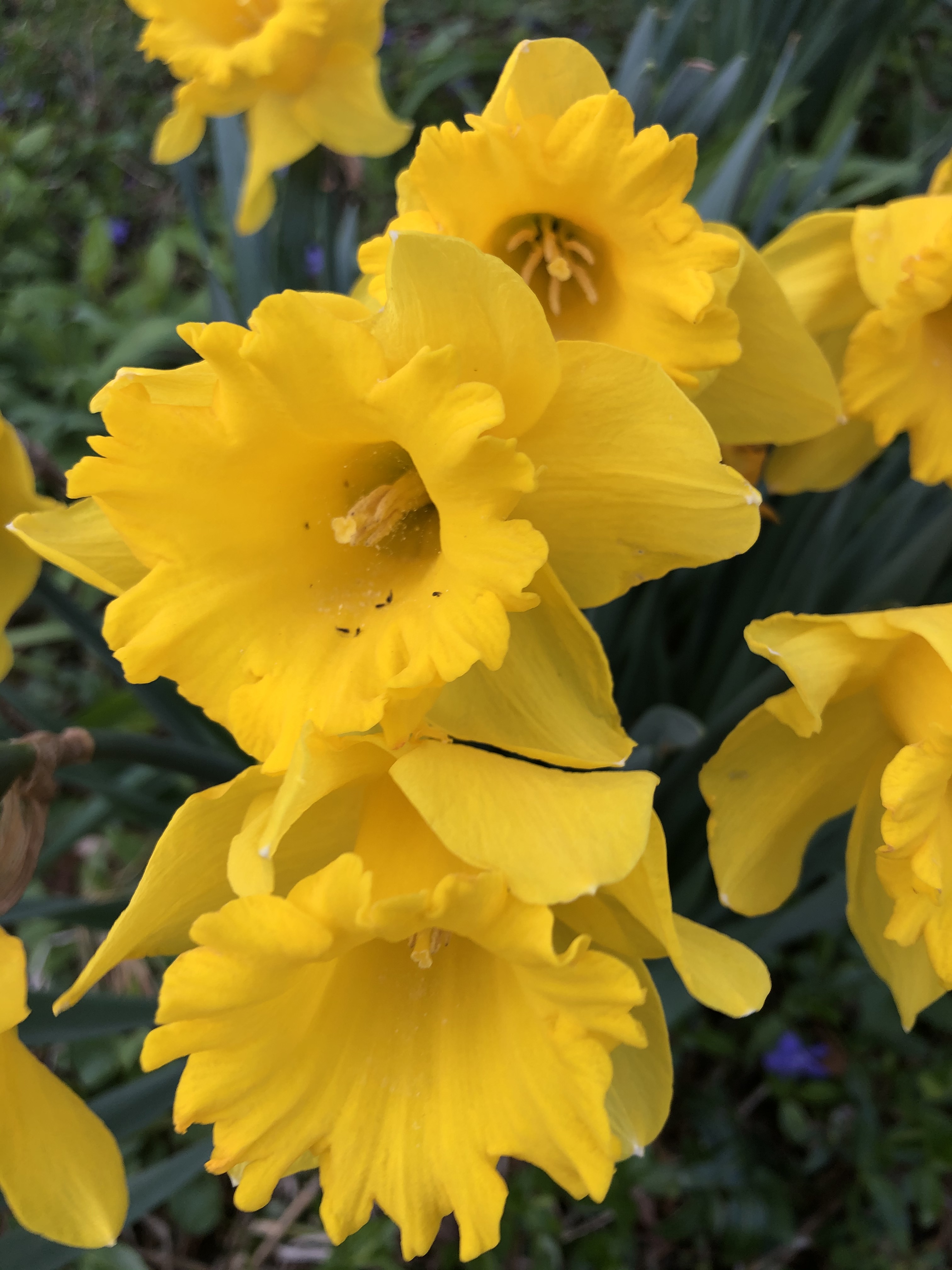
Depending on the on-the-ground snow-load and air temperatures, both Coltsfoot and Forsythia may bloom as early as the last week of March or sometime in April. My photo documentation shows closer to the end of April for us Ashfielders. If you have Daffodils, these two flora will bloom sometime after the Daffodils. Daffodils are totally worth watching for too, because even though they are not edible, Daffodils also have a sunny disposition and offer spring their beauty and tenacity.
Welcome spring!

Arianna Alexsandra Collins, naturalist, poet, writer, wild edible enthusiast, and Wiccan High Priestess.

An edited version of this article appeared in the March 2025 edition of The Ashfield News.
Like Offerings for Community Building on Facebook to learn more about wild edible and medicinal flora and fungi and recipes to incorporate wild foods into your meals.
Visit Offerings for Community Building for rates and packages on having a wild edible and medicinal flora and fungi inventory conducted on your Land (in New England).
Like Hearken to Avalon on Facebook and learn more about the magical world and natural history of plants and the Faie,
 Hearken to Avalon