Cooking with 2 May Wild Edibles: Yellow Morels and Ostrich Fern Fiddleheads

The Moral of the Morel
May is the season for Morels here in Western MA. There is maybe a 3-week window to potentially meet with successful foraging, so the hunt is on! If you are willing to travel south or north, you can extend your foraging excursions from April through early June. If you want to have greater chances in locating Morels, in addition to properly identifying an edible Morel, it’s important to also know who Morels prefer to grow around and the conditions they can thrive in. You will have better luck if it has rained a few days prior to your outing, because like most mushrooms, Morels like it wet.
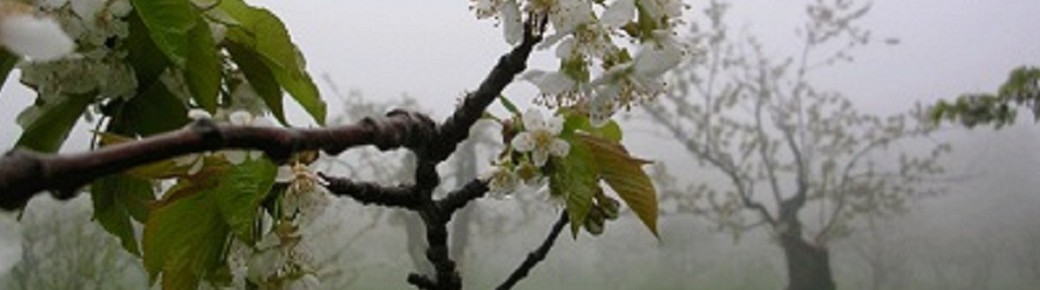
I had this one place right where I lived where I could pick several Yellow Morels. Kin were growing under an Apple tree in the field but no where else on the property. I don’t have access to that place anymore, so I sure hope the current homeowners are enjoying those Morels.
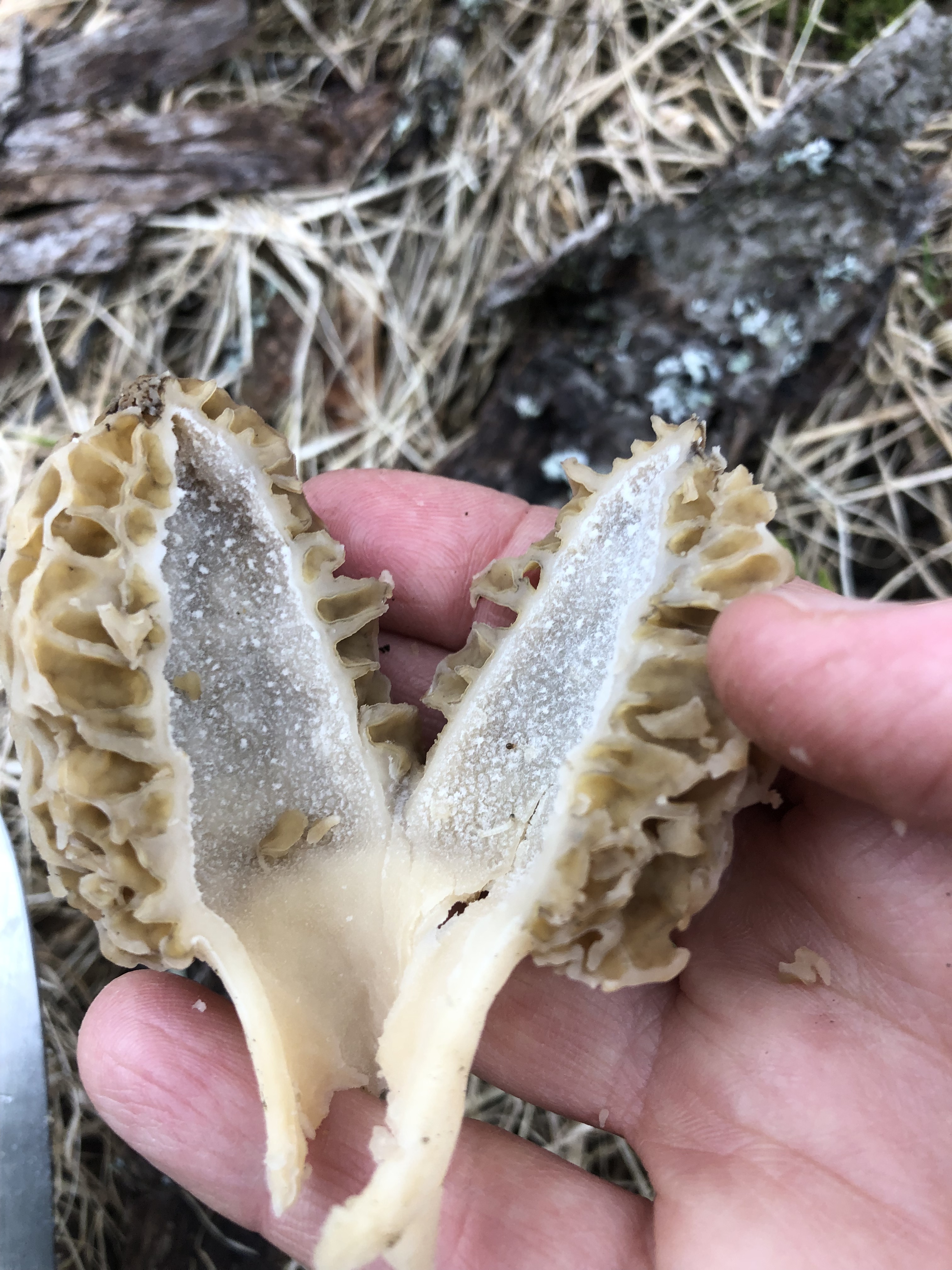
Yellow Morel (Morchella esculenta) is a native edible Morel in Morchellaceae. Caps are fully attached to the stem/stipe and can look like a yellow, blond, or greyish conical honeycomb or wide-holed sponge. The stem/stipe is light-beige and stands up to 2 inches tall. The hollow inside of the cap reminds me of a starry night sky with a grey background and many tiny white specks. The spores reside in the honeycombed cap and make a light yellow to orange spore print.
There are also False Morels which comprise several genera. These mushrooms are not only not edible, they are poisonous. It is vital you learn the difference between edible Morels and False Morels because a False Morel can be deadly. Thankfully, there is an easy way to tell the difference – cut the Morel lengthwise in half. An edible Morel will be symmetrical and hollow the length of the mushroom from cap to stipe.

Look for Morels under Apple, Tulip Popular, American Elm, and Slippery Elm. I have also heard people meeting with success looking under Black Cheery, White Ash, Bitternut Hickory, Black Walnut, and American Sycamore. Look in rich alluvial and fertile soil areas from abandoned orchards to floodplains where the soil’s pH is neutral to slightly basic. You can also scout areas that were burned the year prior because Morels can also pop up under those conditions as well.
As with any edible mushroom, Morels must be cooked before ingesting. To prepare, first cut in half lengthwise, then soak for a few minutes in salty water to kill off any invertebrates hiding in the holes. Dry on a paper towel or cloth. Sauté in butter or oil.
Yellow Morels have antioxidant properties, provide dietary fiber and proteins, contain vitamins D, B complex, and E and iron, copper, and potassium.
Edible Fiddleheads
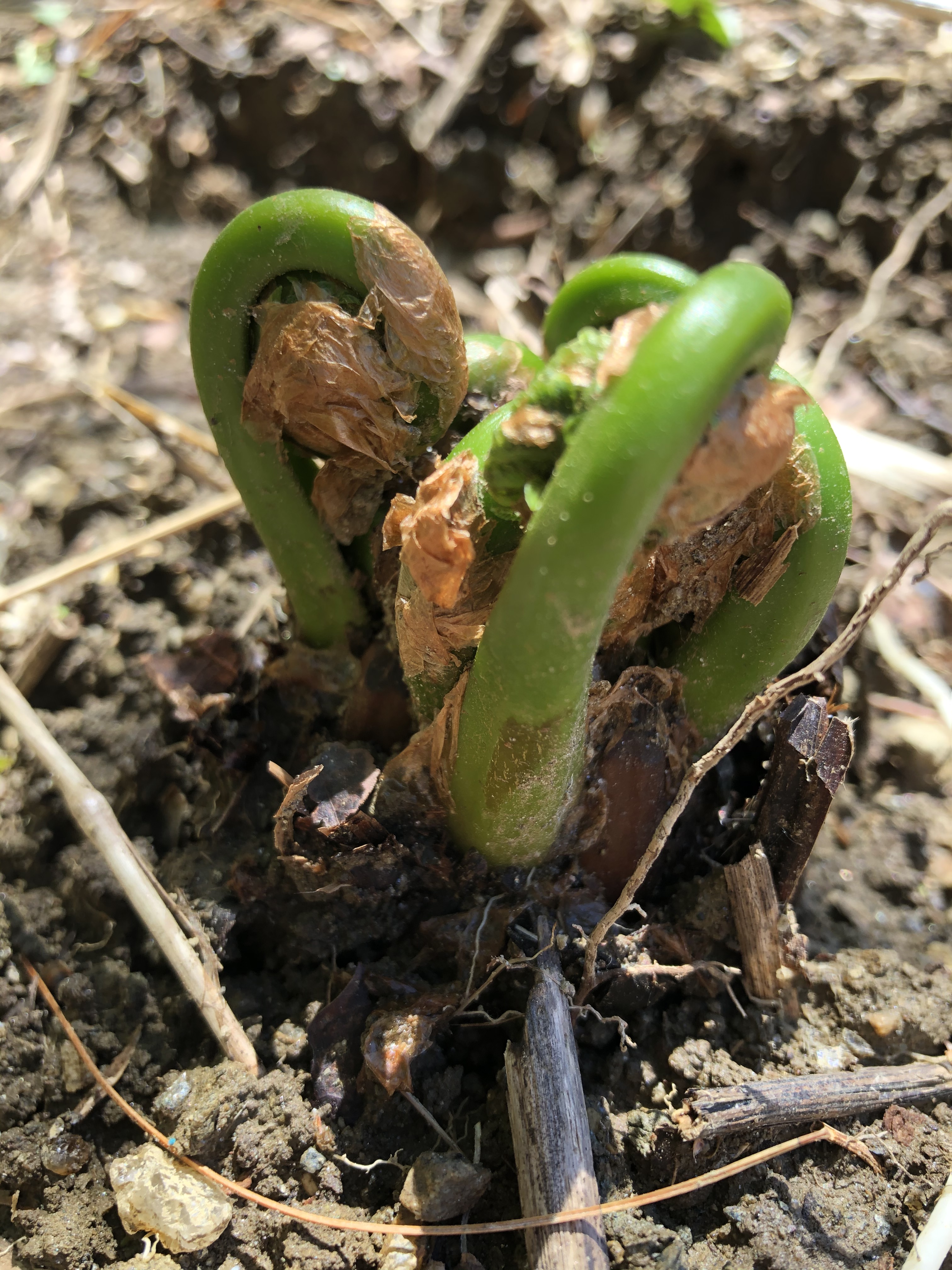
Most all ferns have a fiddlehead stage as they are emerging from their winter’s nap. However, not all fiddleheads are edible and some are quite toxic so it is imperative you can properly identify Ostrich Fern (Matteuccia Struthiopteris) in Onocleaceae, which is a wild edible native fern, growing in our New England floodplains. In late April after the snow has melted you may notice bumpy hummocks with long strands of dead fronds. Within a week or so of observing the hummocks, you will then spy on the tightly curled “fiddleheads” emerging from their mounds in a tight cluster. As the season progresses, the fiddleheads unfurl, and the fronds grow to about 2 to 3 feet tall. Notice the groove along the length of the stem. The Ostrich Fern has spore-bearing stalks that are persistent through the winter, helping to identify this fern’s location. Ostrich Ferns are edible in their fiddlehead stage and can be a tasty option for a springtime stir-fry or soup. Gather the ferns while they are still tightly coiled. Be sure to feel for the groove in the stem. This u-shape is a distinguishing feature. Rinse and brush off the brown papery coating. Fiddleheads can be steamed, boiled, broiled, sautéed, and pickled. Do not eat raw.
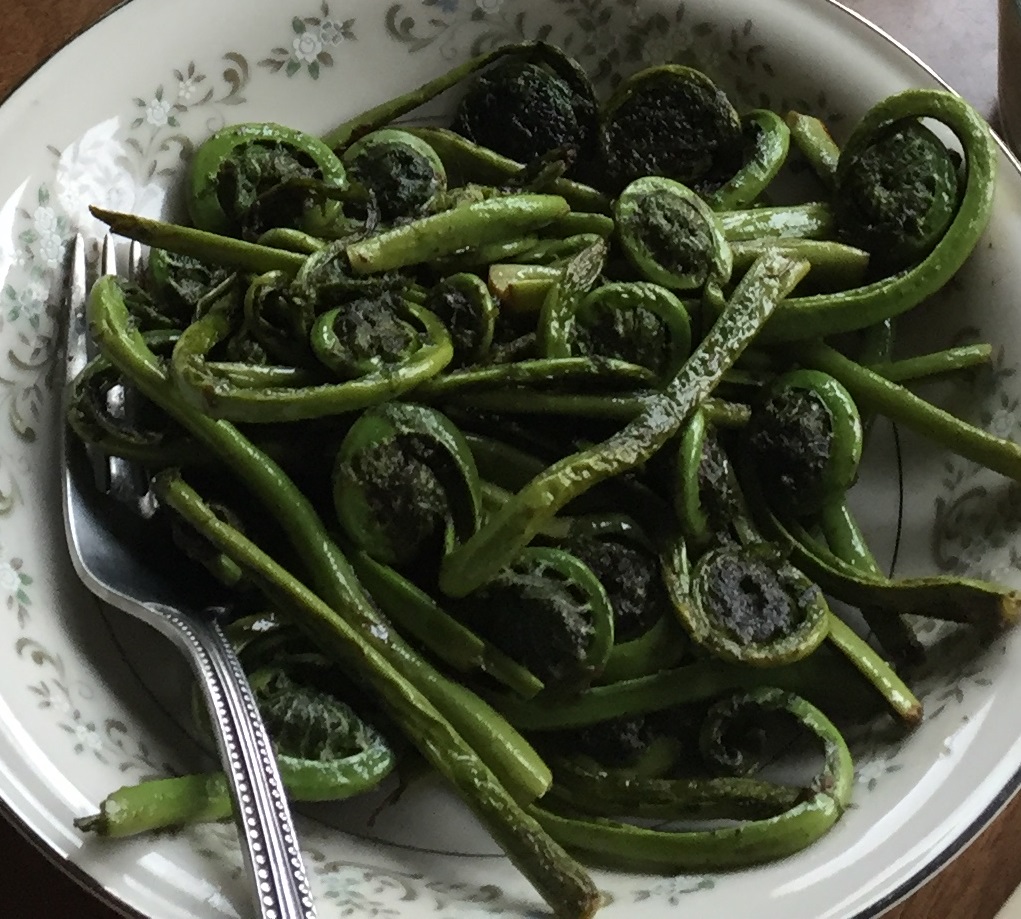
Fiddleheads are an antioxidant, contain vitamins A, B3, and C, and copper and manganese.
Responsible Foraging
As a guide, and in alignment with ethical harvesting, do not pick the first edible flora or fungi you see, nor the last. Consider leaving these wild beings for themselves, other wildlife, and other humans when you are assessing how much to harvest. I have seen places stripped of native wild edibles and it can take a long time for these plants to regenerate, and meanwhile invasive flora can take their place. Watch as you walk to minimize crushing. And always give thanks.
Happy foraging this spring!

Arianna Alexsandra Collins, naturalist, poet, writer, wild edible enthusiast, and Wiccan High Priestess.

An edited version of this article appeared in the May 2024 edition of The Ashfield News.
Like Offerings for Community Building on Facebook to learn more about wild edible and medicinal flora and fungi and recipes to incorporate wild foods into your meals.
Visit Offerings for Community Building for rates and packages on having a wild edible and medicinal flora and fungi inventory conducted on your Land (in New England).
Like Hearken to Avalon on Facebook and learn more about the magical world and natural history of plants and the Faie, and human interactions with them.
 Hearken to Avalon