Vines to Not Get Tangled Up With
Ashfield Spice and Herb Club’s (a Belding Memorial Library project) theme through mid-November is The Poison Garden, so in this article, I thought I would focus on a few berries that you should not eat.
Battling with Bittersweet
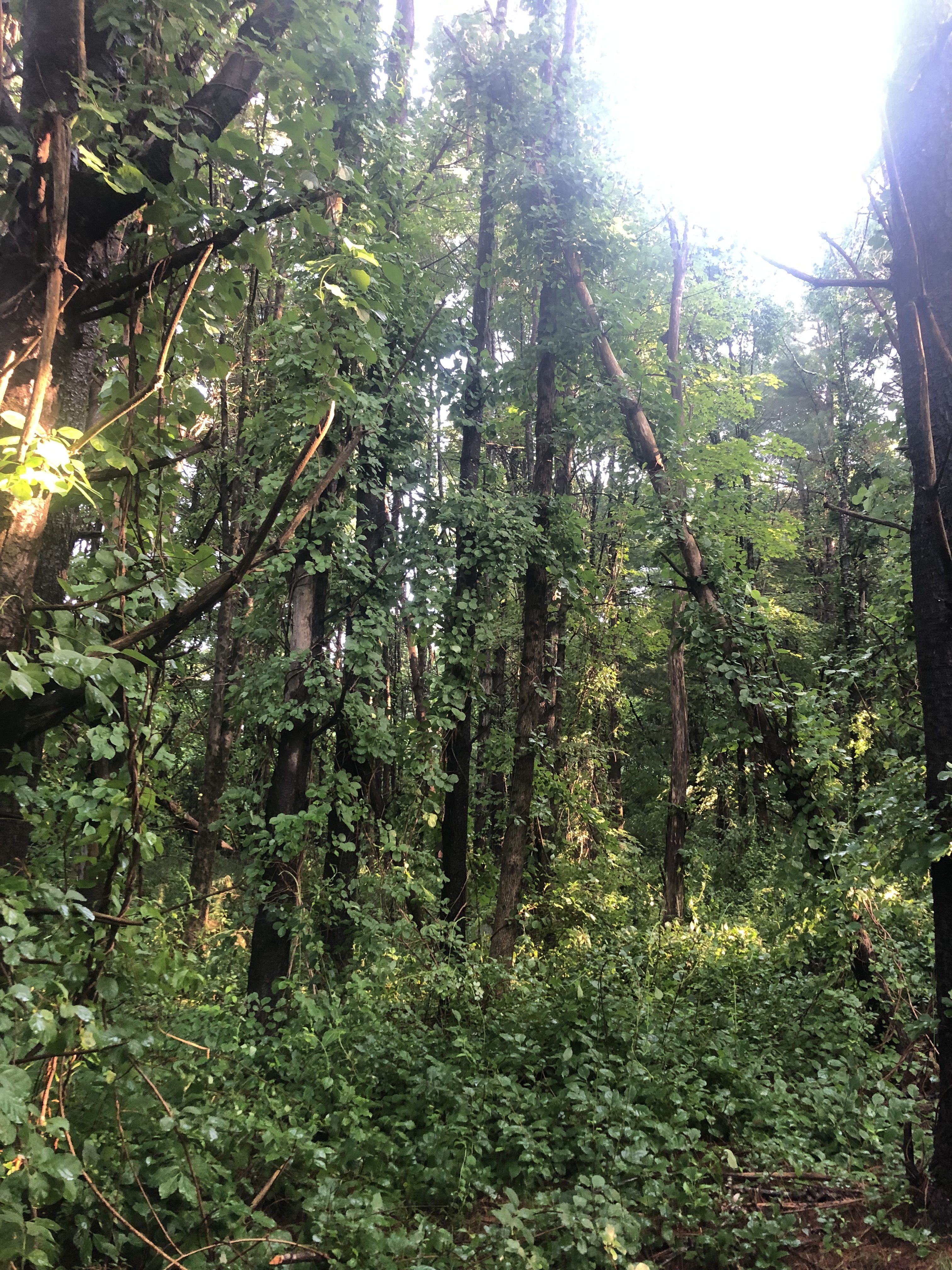
Asiatic Bittersweet, Celastrus orbiculatus in Celastraceae (not to be confused with native American Bittersweet) is the bane of my peace of mind – at least as it relates to the land I live on. This vine, who heralds from Asia, has taken over my little patch of woods and continues to strangle trees throughout New England forests. Deciduous woody vine with alternate elliptical green leaves yellowa in the fall. The green berries pop out all along the vine and turn into colorful yellow casings, splitting open to show bright orange-red berries. The riotous festival of form and color have made this vine coveted for autumnal decorations. But we are paying for the sins of unchecked abundance. Pulling up the orange roots can help mitigate the spread BUT leave even a fragment of a root and the plant has the capacity to regrow. And then there are all those seeds from the berries! Last summer as I was walking into my woods with shears in hand, I could almost hear Bittersweet whisper hotly to one another, “Quick, she’s coming. Trip her.” No sooner did I look up into the tangled jungle Bittersweet created, than one got me and down I went. Thankfully it was not the shears that skewered my side but a stick I fell on. Just a flesh wound really. As I lay there wondering if I could move, it dawned on me that unless my neighbors were outside close by no one would hear me call for help and there was no cell bandwidth in this low area. I felt the Bittersweet mocking me, vines swaying around the White Pines they were strangling. And oh, I could feel the tendrils on the ground brazenly reaching out to wrap me up as if to leave me for a spider’s meal. Bruised and bloodied I managed to get up and limp back to the house. I patched myself up, took time to heal, and then back out I went, more determined than ever. I cut every vine I saw, feeling a righteous rage wash over me. “Ha! No berries this year.” But that was last year. The vines returned and thanks to birds’ droppings, more Bittersweet have found places to grow in my yard. I rip up young tendrils snaking their way up the Mountain Laurel and my porch but to no avail. I fear they are winning this war on ecological diversity. Time (and much ripping out) will tell.

Berries are poisonous to mammals but are tolerated by birds as an emergency food source – hence why you will see berries persist through the winter. The ASPCA states on their website that Asiatic Bittersweet is toxic to dogs, cats, and horses, causing vomiting in cats and dogs, diarrhea, and possible seizures. Do not decorate with this aggressive invasive vine.
Not a doll to tango with
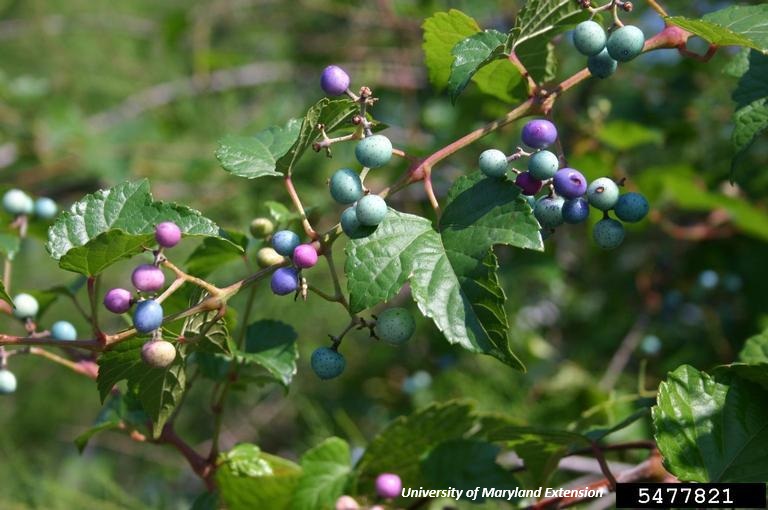
Just 10 years after Bittersweet was introduced in the 1860s, some folks had it in mind to doll up the east coast with another vine from Asia – Porcelain-berry. The invasive Porcelain-berry, Ampelopsis brevipedunculata, is a member of Vitaceae, i.e. the grape family, and is another baneful vine. Resemblance to wild Grape could get you into trouble when you are out foraging for grapes, so it is important to know how to tell these family members apart. Porcelain-berry’s bark is dotted with lenticels and does not peel whereas grape bark lacks lenticels and does peel. Porcelain-berry’s stem pith is white whereas Wild Grape is tan or brown but you must cut the vine to see this. The lobed green leaves vary in shape, even on the same vine and can look rather grape-leaf-like. Porcelain-berry’s fruit does not grow in tight clusters like grapes and berry colors range the easter-egg palette, from teal green to bright blue to festive purple. While they could look like fun candies to eat and apparently not acutely toxic if accidentally consumed, I could find no references to their edibility and do not recommend sampling. Birds and small mammals don’t seem to mind their taste though, hence why the vine spreads throughout the land, choking native flora and smothering them.
No pocketful of Moonseeds
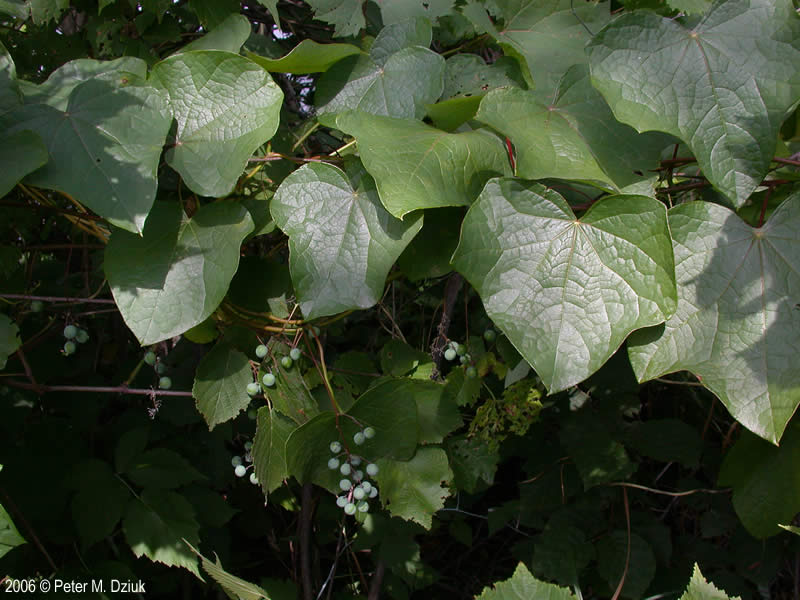
Well, here’s a native vine you can add to your poison garden but be sure not to eat it – all parts are toxic. Moonseed, Menispermum canadense in Menispermaceae, is a woody vine with smooth green lobed leaves – some say heart-shaped, but I have yet to see any love in those leaves. Berries are very dark blue and can remind one of grapes. Wild Grapes contain 2-4 (usually 3) seeds which you can crunch and swallow whereas Moonseed berries contain 1 flattish yellowish crescent-shaped seed – and how would one know that? Someone had to separate pulp from seed to discover that and then decide the seed’s resemblance of a crescent moon should be the name of this flora – instead of say, Danger-Not-Grape or Poisonous-Grape-Look-Alike. So, if you popped what you thought was a grape in your mouth don’t swallow until you feel more than 1 seed in your mouth. Too late you say, you already swallowed a bunch? Then you are in trouble. Symptoms can include abdominal cramping, severe nausea, seizures, and an irregular heartbeat. If you get to a hospital in time, treatment is possible, depending on how many berries you ate. Be sure to have your house in order.
So, when you are out there foraging be sure to know friend from foe. Know who is edible and who can do you in. But there is no need to be afraid. Just learn to tell the difference.

Arianna Alexsandra Collins, naturalist educator, poet, writer, wild edible enthusiast, and Wiccan High Priestess.

An edited version of this article appeared in the November 2025 edition of The Ashfield News.
Like Offerings for Community Building on Facebook to learn more about wild edible and medicinal flora and fungi and recipes to incorporate wild foods into your meals.
Visit Offerings for Community Building for rates and packages on having a wild edible and medicinal flora and fungi inventory conducted on your Land (in New England).
Like Hearken to Avalon on Facebook and learn more about the magical world and natural history of plants and the Faie,
 Hearken to Avalon