Summer’s End and Sacrifice

It is Samhain, Summer’s End. The grain has been cut and stored. The fruit has been picked and processed. This is the last harvest – the blood harvest. Traditionally, this is a time where a portion of one’s farm animals are culled, depending on how much food was able to be brought in for them to eat through the winter.
As we consider the oncoming cold dark months and what we were able to harvest to withstand the storms, now turn your mind to letting go that which doesn’t help you. What needs to be sacrificed in you so that the whole of you can survive? What fear, what habit, what inner demon needs to die so that you may thrive?
Though sacrifice in today’s lexicon equates giving up something you desire for the sake of another – be that other a person or deity, sacrifice’s root is “to make sacred.” This is transformational work. We can participate in this transformational work on a personal level and a community level. Though sacrifice rarely feels joyful, in the grieving process of letting go that which does not serve your greatest good, there is a breath of relief; that this hard work is meaningful and worthwhile.
In the wildlife world sacrifice could mean giving up personal space for warmth. Big Brown Bats and Flying Squirrels cuddle, drawing in closer to help maintain their and their buddies’ body temperature. Canada Geese take turns in the lead, so though the flight may be strenuous, the lead goose knows that their push against the air will be met with encouragement in the form of honks and relief from another companion when they are tuckered out. Honeybees don’t hibernate but instead vibrate all winter long. The females cluster close to their queen, shivering and beating their wings, and take turns on outer perimeter duty within the hive to maintain a survivable temperature inside the hive. Now, the male honeybees, they do sacrifice themselves in a most final way, leaving the hive to die by exposure. One wild neighbor we humans might better relate to is the Gray Squirrel, who scurries around, gathering food, and storing nuts for later winter use. And you may ask, but what is the Gray Squirrel giving up? Time. Not that a Grey Squirrel tends to lollygag about.
Now these examples in Nature do not necessarily equate to any of our human societal norms or expectations but they are survival choices, even those choices that tend to be more instinctual than contemplative. Some of us put on a few extra pounds because in the way back times fat equaled life. And today for almost every other animal that is still the case. Black Bears are a prime example of this. They purposefully gorge on fattening foods because they hibernate, sleeping the winter away and without food intake, wasting away too. But most survive the winter using this tactic. Now the Bear may not see this yo-yo weight gain and loss or missing out on winter sports as a sacrifice. They just do what they instinctively know needs to be done.
Now let me go back to the questions I posed earlier, keeping in mind that in your response, you are not resigning yourself to giving up something you desire, but releasing something that you intuitively know needs to go so that you can, and your community can, be ever more vital.
For me, that inner demon hate is too heavy a burden to bear. I can get so angry at the state of our country and the world and Patriarchy, but without generative action to make my life and my community’s life healthier, how does hate serve a purpose? No, hate must be left to die of exposure. In letting hate die, there is room for other emotions. No, not despair. Kick that out too. And let that glimmer of hope that our curious species isn’t doomed but has the capacity and will to evolve.
There is a chant that goes, “Where there’s fear, there’s power. Passion is our healer. Desire cracks open the gate. When you’re ready it will take you through.” So that fear you (I) harbor – about political unrest, climate instability, war – that energy you are pouring into that fear is sapping you. Turn it around in whatever way is most generative for you to pivot into actions that inspire hope – yours and your community’s. No one gets out of life alive, but we can contribute to life being more joyous and just for ourselves and all beings on this one planet we all share and cherish.
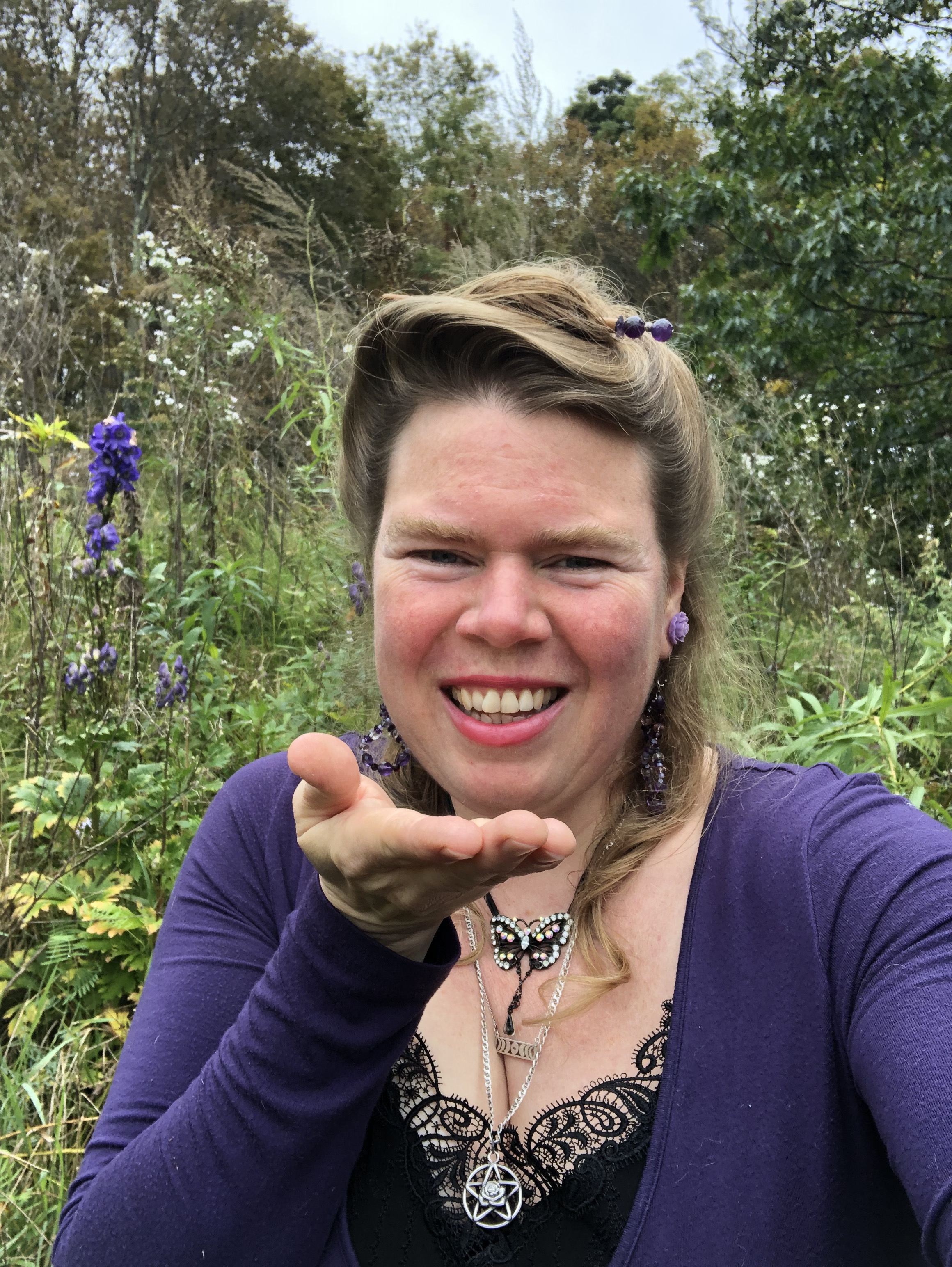
Arianna Alexsandra Collins, naturalist, poet, writer, wild edible enthusiast, and Wiccan High Priestess.

An edited version of this article appeared in the November 2024 edition of The Ashfield News.
Like Offerings for Community Building on Facebook to learn more about wild edible and medicinal flora and fungi and recipes to incorporate wild foods into your meals.
Visit Offerings for Community Building for rates and packages on having a wild edible and medicinal flora and fungi inventory conducted on your Land (in New England).
Like Hearken to Avalon on Facebook and learn more about the magical world and natural history of plants and the Faie, and human interactions with them.
 Hearken to Avalon