Home Is Where Your Shell Is: Learning About Turtles and Especially One Wood Turtle
This article was borne from a conversation between my neighbor Susan and me about the plight of a particular wood turtle. Yes, that’s right, if you catch me before I have come up with a topic for an article, your query may become my topic. But before we get to our wood turtle neighbor, let me provide some background on turtles.
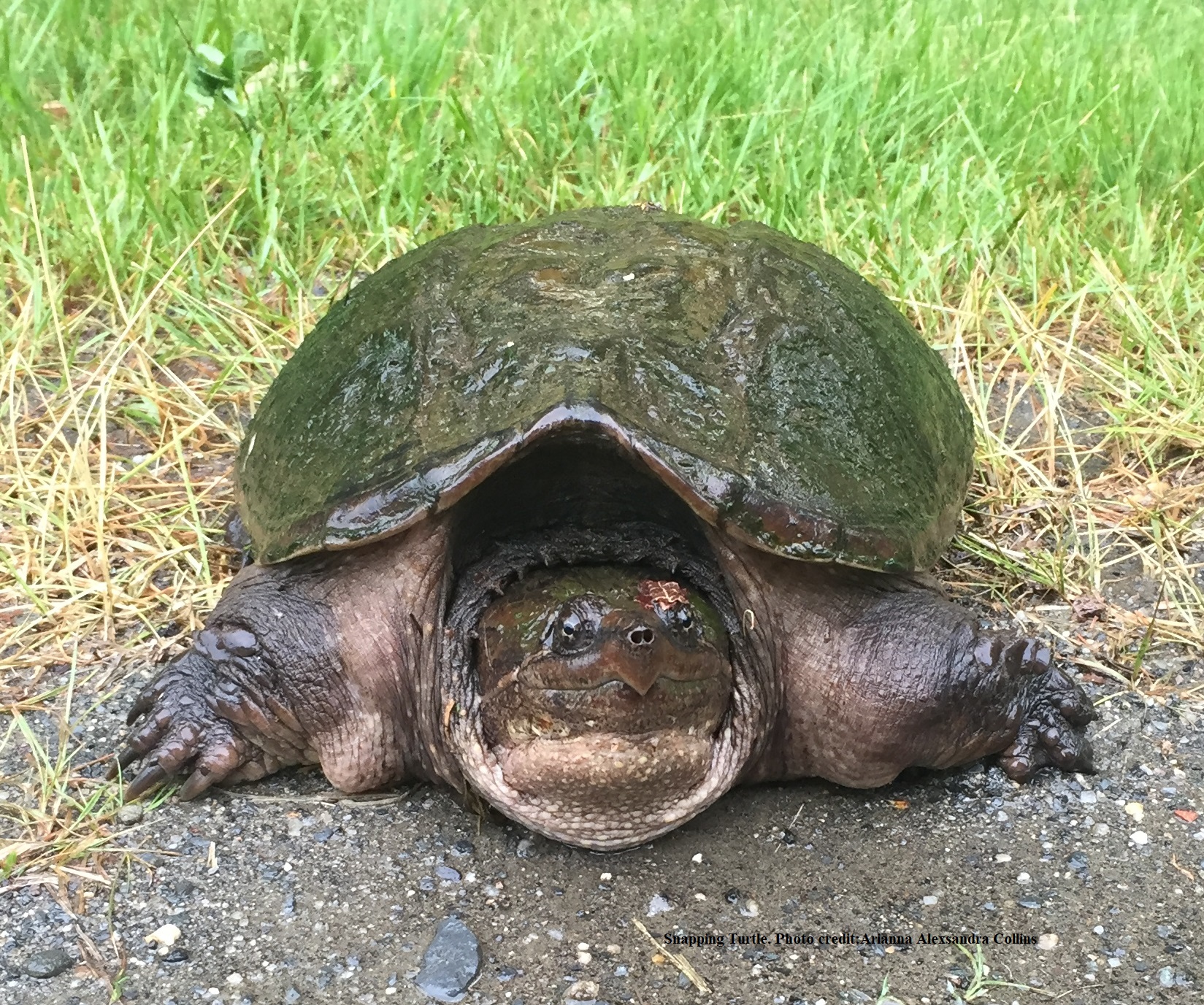
First, despite what you learned from cartoons, a turtle cannot leave their shell; it is fused to their body. Consider a turtle’s shell as the same as your bones but on the outside. Also, turtles as a species are very old. Fossil records show that turtles evolved on planet Earth over 250 million years ago.
In general, how a human can tell the difference between male and female turtles is that 1) females’ tails are shorter and thinner than male tails; 2) her front claws tend to be the same size as her toes whereas males tend to have longer claw to toe ratio; and 3) females have a flat plastron (bottom shell) whereas males have a concave plastron. Why you ask? The better for the male to fit up against the female’s back portion of her carapace (top shell) to mate with her. After mating, a pregnant female will lay and bury her eggs in soft ground. Eggs will incubate for 60 to 90 days before hatching – that is of course providing that the nest is not raided by a predator.
All turtles are ectothermic, which means that their body temperature is primarily driven by external factors. Turtles who make New England their home go into hibernation during the winter months, called brumation for reptiles. To avoid ice crystals forming on or in their bodies, terrestrial turtles dig a burrow below the frost level whereas aquatic turtles sit at the bottom of a waterway. As winter sets in, the colder the turtle’s surrounding environment gets, the turtle’s metabolism, and therefore all organ function, slows down. And like other ectotherms, turtles survive off their fat and glycogen reserves. Jacqueline Litzgus, science correspondent for PBS Newshour put it this way, “When turtles hibernate, they rely on stored energy and uptake oxygen from the pond water by moving it across body surfaces that are flush with blood vessels. In this way, they can get enough oxygen to support their minimal needs without using their lungs. Turtles have one area that is especially well vascularized — their butts…” Yes, we went there, “butt breathing”. Brumating turtles can breathe through their bottoms and the technical term for this ability is cloacal respiration. And the reason I bring this up is because the species I am about to discuss – the wood turtle – tend to brumate underwater.
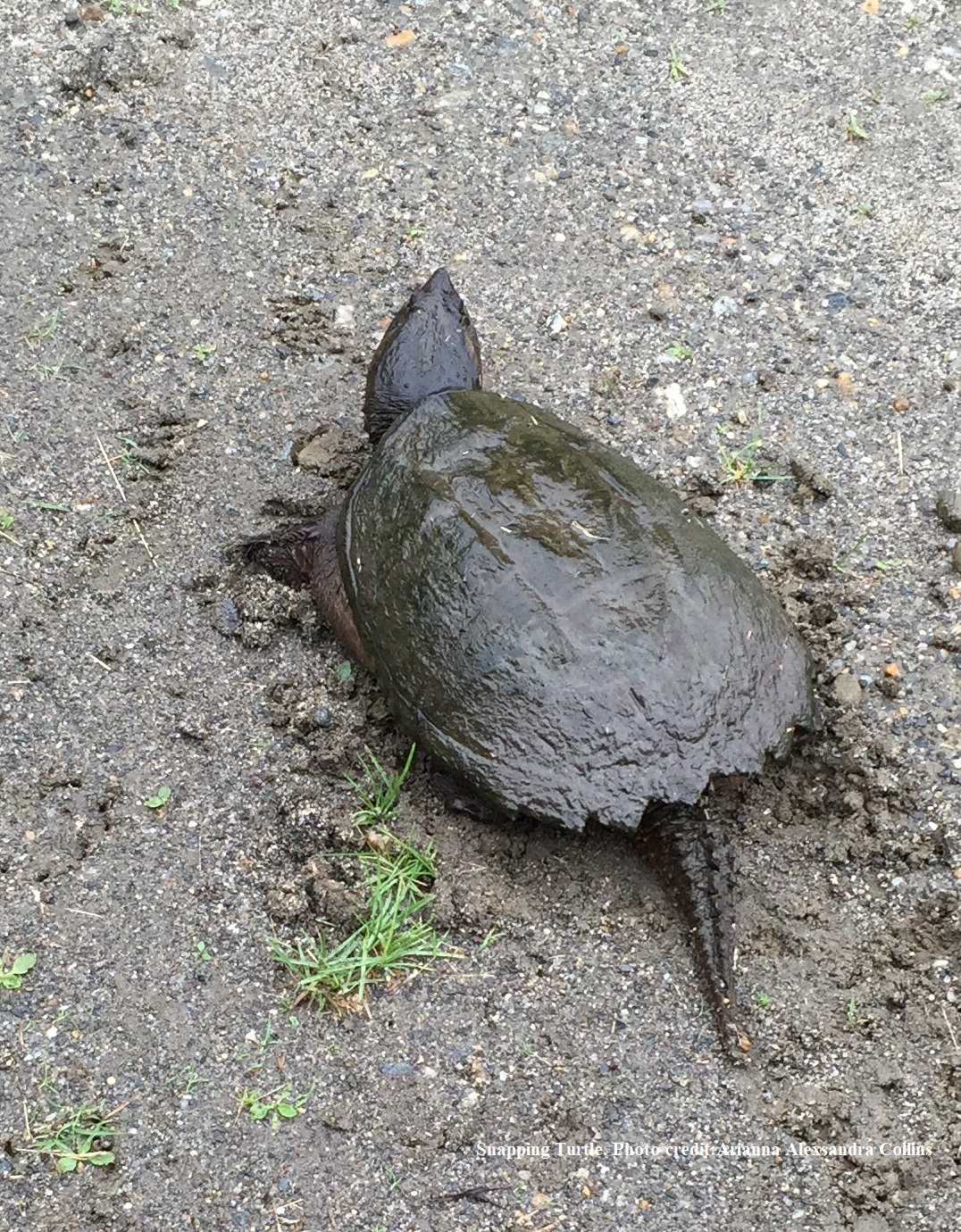
According to Massachusetts Audubon, there are 10 native species of turtles who make the Commonwealth their home, 8 of which may be found in Western MA. Three species I have come across in my neighborhood include: Eastern Box Turtle (Terrapene carolina), Painted Turtle (Chrysemys picta), and Snapping Turtle (Chelydra serpentina).
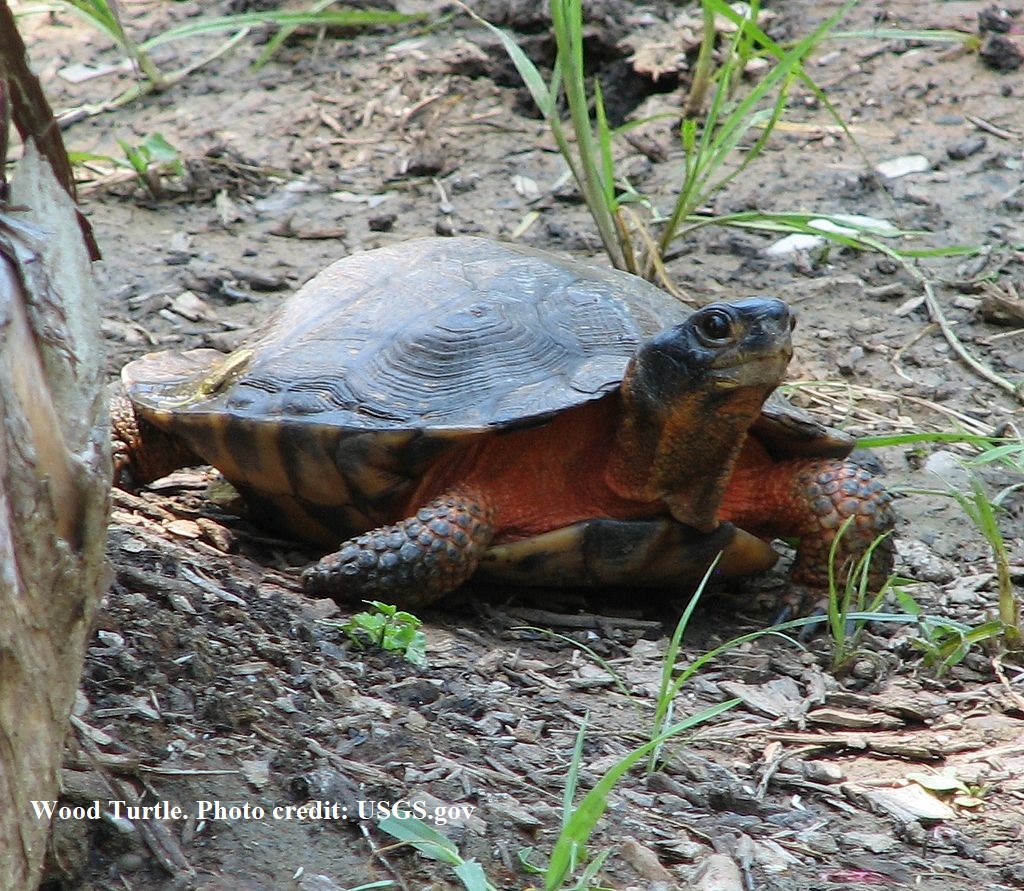
Though I haven’t met up with Wood Turtle (Clemmys insculpta) there have been state officials scouting the wetlands in my town in search of this species of special concern under the MA Endangered Species Act. Wood turtles hunt invertebrates and forage for algae and grass in wetlands and fields. They grow to 5-8” long from beak to tail. Yes, a turtle’s mouth is called a beak. Their beautifully-patterned brown carapace is not as dome-shaped as a box turtle and not as flat as a snapping turtle. Their plastron is bright yellow with black spots. Their neck and upper parts of their legs are bright orange. They share the Glyptemys genus with only one other species of turtle, the bog turtle (Glyptemys muhlenbergii), also native to Massachusetts.
As turtles make their way to their winter homes, they may need to cross roads to get there. If you find a turtle crossing a road and want to help the turtle, carefully pick them up by the sides of their carapace and move them off the road in the direction they were headed. Note: If you are helping a snapping turtle, wear thick gloves because they will protest your help. Better to walk behind them to inspire movement off the road.
In mid-October a Wood Turtle was hit by a car on xxx road. The turtle sustained brain injuries, an injured leg, and a crack in ki’s plastron. My neighbor Susan called Turtle Rescue League, a licensed native turtle rehabilitation clinic and non-profit organization located in Southbridge, MA. TRL members drove out to Susan to pick up the badly hurt turtle. On October 23, TRL staff replied to Susan’s inquiry about the wood turtle’s health, “Annabelle is still with us and doing very well for a turtle with such a significant head strike. Turtles heal slowly, and he is not out of the woods, but he is improving a bit each day. You may know wood turtles are a threatened species, and that makes every individual extremely important to their population. You helped much more than one turtle by doing what you did – thank you.” I am a little fuzzy on the details of how this wood turtle acquired the name Annabelle but just know that Susan and TRL staff are in correspondence, and should the turtle recover, Susan will be invited to participate in Annabelle’s release back into xxx wetlands. So, 1) let’s all send our neighbor Annabelle good vibes and healing energy, and 2) let’s all be mindful on our roads so that Annabelle stays safe once returned to our community.
If you accidentally hit a turtle or come across an injured turtle, contact the Turtle Rescue League at turtlerescueleague.org.
Note: Exact locations not provided to protect the innocent (the turtles). In my communications with Turtle Rescue League, staff expressed concerns that poachers would come in and steal Annabelle and other wood turtles from their homes and sell them on the black market. (A pox upon poachers! May our wild neighbors be safe from their terribles ways.)
“Wood turtle Status: A Species of Special Concern under the Massachusetts Endangered Species Act. It’s illegal to kill, harass, collect, or possess this turtle.” ~Mass Audubon
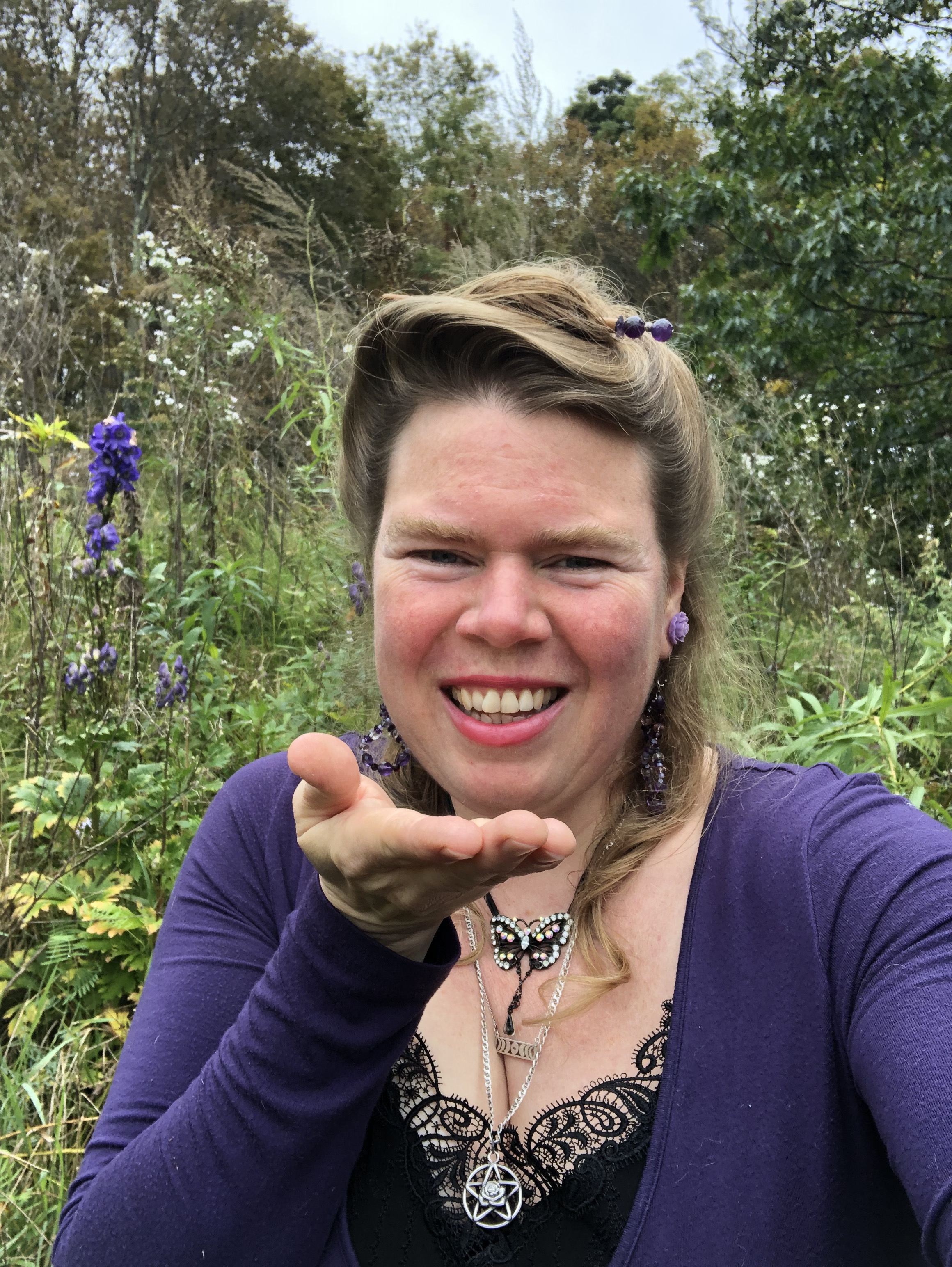
Arianna Alexsandra Collins, naturalist, poet, writer, wild edible enthusiast, and Wiccan High Priestess.

An edited version of this article appeared in the October 2023 edition of The XXX News.
Like Offerings for Community Building on Facebook to learn more about wild edible and medicinal flora and fungi and recipes to incorporate wild foods into your meals.
Visit Offerings for Community Building for rates and packages on having a wild edible and medicinal flora and fungi inventory conducted on your Land (in New England).
Like Hearken to Avalon on Facebook and learn more about the magical world and natural history of plants and the Faie, and human interactions with them.
Resources:
Mass Audubon’s Turtle Identification
Natural Heritage & Endangered Species Program on Wood Turtles
“The secret to turtle hibernation: Butt-breathing”, PBS Newshour


Annabelle update: It is with sadness I inform the community that Annabelle the Wood Turtle didn’t recover from his injuries. Turtle Rescue shared with my neighbor Susan that, “We were able to keep him comfortable until he passed.” Good Journey, Annabelle.
LikeLike